
Evernew Transformer is a professional pole mounted transformer manufacturer in China, supplying single-phase and three-phase oil-immersed distribution transformers for overhead power distribution networks worldwide. Our product range includes popular 25 kVA, 50 kVA, 75 kVA, 100 kVA, 167 kVA, and other customized transformer ratings.
Designed for utility companies, rural electrification, residential distribution, and commercial power systems, our pole-mounted transformers are available with customized primary and secondary voltages, copper or aluminum windings, and project-specific designs based on ANSI/IEEE, IEC, and applicable local utility requirements.
Contact us for factory-direct pricing, technical specifications, and customized pole-mounted transformer solutions.


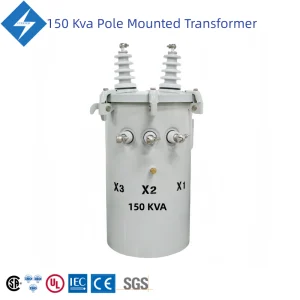
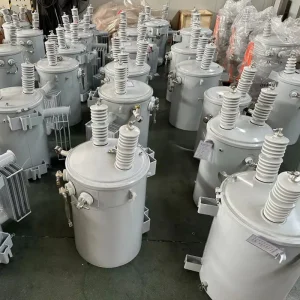


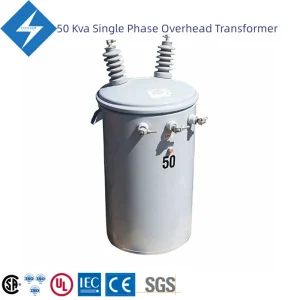
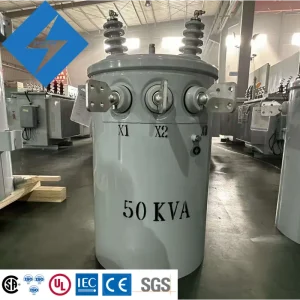


Pole Mounted Transformers – Power Pole Transformer Manufacturer
Evernew Transformer is a professional power pole transformer manufacturer in China, specializing in single-phase and three-phase oil-immersed pole mounted distribution transformers for utility companies, electrical contractors, power distributors, EPC companies, and industrial projects worldwide.
A power pole transformer, also known as an electric pole transformer, utility pole transformer, or overhead distribution transformer, is designed to reduce medium-voltage electricity to usable low-voltage levels. Installed on utility poles and connected to overhead distribution lines, these transformers provide reliable electrical power for residential, commercial, agricultural, and industrial applications.
Evernew manufactures customized pole mounted transformers with different kVA ratings, primary and secondary voltage configurations, copper or aluminum windings, and electrical designs. Our transformer solutions can be developed according to applicable ANSI/IEEE, IEC, CSA, and project-specific utility requirements.
From single-phase distribution transformers for residential networks to three-phase pole mounted transformers for commercial and industrial applications, we provide customized solutions for different overhead power distribution systems.
What Is a Pole Mounted Transformer?
A pole mounted transformer is an outdoor electrical distribution transformer installed on a utility pole to step down medium-voltage electricity to a lower voltage suitable for end users.
These transformers are commonly used in overhead electrical distribution networks. They receive electricity from medium-voltage distribution lines and convert it into a voltage suitable for homes, businesses, farms, and industrial facilities.
A typical pole mounted distribution transformer consists of:
Transformer Core: Provides the magnetic path for transferring electrical energy between windings.
Primär lindning: Receives medium-voltage electricity from the distribution network.
Sekundär lindning: Supplies lower-voltage electricity to connected loads.
Transformer Tank: Houses the core, windings, and insulating liquid in oil-immersed designs.
Isolerande olja: Provides electrical insulation and helps dissipate heat.
Bussningar: Provide insulated electrical connections for incoming and outgoing conductors.
Kylsystem: Transfers heat from the active part to the surrounding environment.
Protection Accessories: May include surge arresters, fuses, pressure relief devices, and other specified accessories.
Mounting Brackets: Support the transformer during installation on the designated utility pole structure.
The exact construction and accessories depend on the transformer design, voltage class, capacity, local utility requirements, and installation conditions.
Typer av stolpmonterade transformatorer
Pole mounted distribution transformers are primarily classified by phase configuration, rated capacity, and electrical application.
1. Single Phase Power Pole Transformers
Single-phase power pole transformers are widely used in residential distribution networks, rural electrification projects, agricultural facilities, and small commercial installations.
They are commonly installed on individual utility poles to supply single-phase electrical loads.
Typical capacity options include:
10 kVA
15 kVA
25 kVA
37,5 kVA
50 kVA
75 kVA
100 kVA
167 kVA
Common North American primary voltage configurations include 7.2 kV, 12.47 kV, and 13.2 kV, with secondary options such as 120/240 V.
Other voltage ratios can be customized for different international distribution systems.
Typical applications:
Residential electricity distribution
Rural homes and communities
Agricultural irrigation systems
Small commercial buildings
Remote power distribution networks
2. Trefas stolpmonterade transformatorer
Three-phase pole mounted transformers are designed for overhead distribution systems that require three-phase electricity.
They are suitable for commercial facilities, industrial equipment, agricultural operations, workshops, and utility distribution networks.
Depending on the utility network and installation design, three-phase distribution can be provided through an individual three-phase transformer or a bank of three single-phase transformers.
Common capacity options include:
50 kVA
75 kVA
100 kVA
150 kVA
167 kVA
225 kVA
300 kVA
500 kVA
Typical primary voltage classes include 11 kV, 12.47 kV, 13.2 kV, 13.8 kV, 24.9 kV, and 34.5 kV, subject to the selected design.
Secondary voltage options may include 208Y/120 V, 220Y/127 V, 380Y/220 V, 400Y/230 V, and 480Y/277 V.
Typical applications:
Commercial power distribution
Industrianläggningar
Agricultural processing plants
Water pumping stations
Small manufacturing facilities
Distributionsnät för allmännyttiga tjänster
3. Pole Mounted Distribution Step-Down Transformers
Step-down transformers are the most common type of pole mounted distribution transformer.
They reduce medium-voltage electricity from overhead distribution lines to lower voltage levels for residential, commercial, and industrial consumers.
For example, a transformer may convert 12.47 kV primary voltage to 120/240 V secondary voltage in a North American residential distribution system.
The primary and secondary voltage ratings, insulation level, capacity, and protection accessories are selected according to the local distribution network.
4. Pole Mounted Transformer Banks
In some overhead distribution systems, three-phase power is supplied through a bank of three single-phase pole mounted transformers.
Each transformer serves one phase of the three-phase system. The transformers are interconnected according to the required voltage and connection configuration.
Common bank configurations include Delta-Delta, Delta-Wye, and other utility-specified arrangements.
Transformer banks are used when individual single-phase units provide advantages in installation, maintenance, replacement, or distribution system design.
Power Pole Transformer Specifications
Evernew manufactures customized pole mounted distribution transformers for different electrical networks and project requirements.
The following table summarizes common design options.
Final transformer specifications, dimensions, weight, efficiency, impedance, insulation level, BIL, temperature rise, and accessories are determined according to the electrical system, utility requirements, and installation conditions.
Power Pole Transformer Voltage Configurations by Market
Different countries and electricity utilities use different medium-voltage distribution networks and low-voltage supply standards.
Evernew provides customized electric pole transformer designs for North American, South American, and other international markets.
North American Power Pole Transformers
North American distribution networks commonly use single-phase and three-phase overhead distribution systems.
Typical project voltage examples include:
For the United States and Canada, pole mounted transformers may require specific insulation levels, BIL ratings, protective accessories, efficiency requirements, and utility-approved designs.
Evernew can review project specifications for transformers intended for North American distribution systems, including applicable ANSI/IEEE and CSA requirements.
South American Electric Pole Transformers
South American countries have different medium-voltage and low-voltage distribution standards. Transformer voltage configurations must therefore be selected according to the local utility network.
Typical project voltage examples include:
Lorem ipsum dolor sit amet, consectetuer adipiscing elit, sed diam nonummy nibh euismod tincidunt ut laoreet dolore magna aliquam erat volutpat.
These are representative voltage combinations rather than universal national standards. Final voltage ratios and connections must be confirmed with the local electricity utility and project engineering documents.
Customized Voltage Solutions for International Projects
In addition to North American and South American applications, Evernew supplies customized pole mounted transformers for international distribution networks in Africa, Asia, the Middle East, and other regions.
Customers can specify:
Primary and secondary voltage ratings
Single-phase or three-phase configuration
Rated capacity and frequency
Lindningar av koppar eller aluminium
Required insulation level and BIL
Transformer connection and grounding arrangement
Protection accessories and installation requirements
Our engineering team reviews project specifications before confirming the final transformer design.
Pole Mounted Transformer Applications
Pole mounted transformers play an important role in overhead electricity distribution, providing voltage conversion for different types of consumers and infrastructure projects.
1. Residential Power Distribution
Single-phase pole mounted transformers supply electricity to residential buildings, houses, apartment communities, and suburban neighborhoods.
They are commonly used in overhead distribution networks where electricity is delivered through utility poles.
2. Rural Electrification
Electric pole transformers are widely used in rural electrification projects to provide reliable electricity to remote communities, agricultural areas, and locations without underground distribution infrastructure.
3. Commercial Buildings
Three-phase pole mounted transformers can supply commercial buildings, retail facilities, offices, and other businesses requiring three-phase electrical power.
4. Industrial Facilities
Industrial distribution applications may require higher-capacity pole mounted transformers to supply motors, production equipment, workshops, and auxiliary electrical systems.
5. Agricultural Irrigation
Pole transformers can provide electricity for agricultural irrigation pumps, water treatment equipment, grain processing facilities, and farm operations.
6. Mining and Infrastructure Projects
Overhead distribution systems are also used in certain mining areas, construction sites, infrastructure projects, and remote industrial locations.
7. Renewable Energy and Distributed Power
Pole mounted distribution transformers can be used in selected distribution and interconnection applications associated with distributed solar power, small renewable energy installations, and local electrical networks.
The appropriate transformer configuration depends on the project voltage, power flow, protection design, and utility interconnection requirements.
How Does a Transformer on a Power Pole Work?
A transformer on a power pole operates through electromagnetic induction between its primary and secondary windings.
The basic working process includes the following stages:
Medium-Voltage Input: Electricity enters the transformer through its primary-side connections from the overhead distribution network.
Magnetic Induction: Alternating current in the primary winding generates a changing magnetic flux in the transformer core.
Voltage Conversion: The magnetic flux induces voltage in the secondary winding according to the turns ratio.
Low-Voltage Output: The secondary winding supplies electricity at the required voltage for connected consumers.
Protection and Distribution: Protective devices and grounding arrangements help provide safe and reliable operation according to the electrical system design.
The voltage transformation ratio is determined by the relationship between the primary and secondary winding turns.
For a typical residential application, a medium-voltage input may be reduced to a low-voltage output such as 120/240 V, depending on the local distribution system.
Pole Mounted Transformer Parts and Construction
Understanding the main components of a pole mounted transformer helps utility contractors and electrical engineers evaluate equipment requirements.
Main Transformer Components
The final accessory arrangement varies according to transformer capacity, voltage class, utility requirements, and the selected tank design.
How to Choose the Right Pole Mounted Transformer
Selecting the correct pole mounted distribution transformer requires evaluating the electrical load, distribution network, environmental conditions, and applicable standards.
1. Determine the Required Transformer Capacity
The transformer kVA rating should be selected according to the connected load, demand profile, expected load growth, and utility design requirements.
Common ratings include 25 kVA, 37.5 kVA, 50 kVA, 75 kVA, 100 kVA, 167 kVA, 225 kVA, and 300 kVA.
2. Confirm Primary and Secondary Voltage
Primary voltage must match the medium-voltage distribution network, while secondary voltage must meet the requirements of connected consumers.
Always confirm the actual utility voltage and grounding arrangement before ordering.
3. Select Single-Phase or Three-Phase Configuration
Single-phase transformers are commonly used for residential and smaller loads.
Three-phase transformers or three-phase transformer banks are suitable for commercial, industrial, and other applications requiring three-phase electricity.
4. Choose Copper or Aluminum Windings
Copper and aluminum are both used in distribution transformer winding designs.
The selection depends on project requirements, electrical performance, transformer dimensions, and commercial considerations.
5. Confirm Applicable Standards and Efficiency Requirements
Depending on the destination market, the transformer may need to comply with ANSI/IEEE, IEC, CSA, DOE, or local utility requirements.
Applicable energy efficiency requirements and certification scope should be confirmed for the specific model and market.
6. Evaluate Installation and Pole Loading
Pole mounted transformer installation requires an appropriate supporting structure.
Transformer weight, dimensions, mounting arrangement, wind loading, conductor connections, clearances, and local utility installation rules should be evaluated by qualified engineers.
7. Specify Protection and Accessories
The required bushings, fuses, surge arresters, grounding provisions, tap changer, and other accessories should be determined according to the electrical design and utility specifications.
Pole Mounted Transformer vs Pad Mounted Transformer
Pole mounted and pad mounted transformers are both used in electrical distribution systems, but they are designed for different installation environments.
The appropriate type depends on the distribution network, available installation space, safety requirements, and utility standards.
Pole Mounted Transformer Manufacturing and Quality Testing
Evernew Transformer manages key manufacturing processes for oil-immersed distribution transformers, including magnetic core cutting, winding, active part assembly, tank fabrication, insulation processing, oil filling, and final inspection.
Our manufacturing facilities support customized transformer production for different international markets and project requirements.
Depending on the applicable standard and approved technical specification, transformer testing may include:
Winding resistance measurement
Voltage ratio and polarity or vector group verification
No-load loss and excitation current measurement
Load loss and impedance voltage measurement
Applied voltage withstand test
Induced voltage withstand test
Insulation resistance measurement
Additional tests as required by the project
Testing procedures and acceptance criteria are determined according to the agreed technical specifications and applicable standards.
Why Choose Evernew Transformer as Your Power Pole Transformer Manufacturer?
Evernew Transformer provides customized electrical distribution transformer solutions for international customers, including utility contractors, electrical distributors, EPC companies, and industrial buyers.
Our manufacturing advantages include:
In-House Core and Coil Production: Control over key transformer manufacturing processes.
Engineering Capabilities: Technical support for customized voltage ratios, capacities, and electrical configurations.
Single-Phase and Three-Phase Solutions: Different transformer configurations for overhead distribution applications.
Copper and Aluminum Windings: Material options based on project requirements.
Manufacturing and Testing Facilities: Production inspection and electrical testing capabilities.
International Project Experience: Support for customers in different countries and distribution markets.
Customized Production: Transformer designs based on approved drawings and technical specifications.
Export Support: Assistance with technical documentation, packaging, and international shipment arrangements.
Our product range covers distribution transformers, pole mounted transformers, pad mounted transformers, dry-type transformers, and power transformers.
Frequently Asked Questions About Pole Mounted Transformers
1. What is a power pole transformer?
A power pole transformer is an electrical distribution transformer installed on a utility pole to reduce medium-voltage electricity to a lower voltage suitable for residential, commercial, agricultural, and industrial consumers.
2. What is an electric pole transformer?
An electric pole transformer is another commonly used term for a pole mounted distribution transformer. It is used in overhead power distribution networks to supply lower-voltage electricity to connected consumers.
3. What is a utility pole transformer?
A utility pole transformer is a distribution transformer installed on a utility-owned or utility-supported pole. It converts medium-voltage electricity into lower-voltage power for local distribution.
4. What is a telephone pole transformer?
A telephone pole transformer is a common search term referring to an electrical transformer installed on a utility pole. These transformers are used in overhead electricity distribution networks rather than telephone signal transmission.
5. What are the common sizes of pole mounted transformers?
Common single-phase ratings include 10 kVA, 15 kVA, 25 kVA, 37.5 kVA, 50 kVA, 75 kVA, 100 kVA, and 167 kVA.
Three-phase configurations may include 50 kVA, 75 kVA, 100 kVA, 150 kVA, 167 kVA, 225 kVA, 300 kVA, and other customized ratings.
6. Are pole mounted transformers single-phase or three-phase?
Pole mounted transformers are available in both single-phase and three-phase configurations. Three-phase electricity may also be supplied using a bank of three single-phase transformers, depending on the utility distribution design.
7. What voltage does a transformer on a power pole use?
The primary voltage depends on the local overhead distribution network. Common examples include 7.2 kV, 12.47 kV, 13.2 kV, 13.8 kV, 24.9 kV, and 34.5 kV.
Secondary voltage may include 120/240 V, 208Y/120 V, 220Y/127 V, 380Y/220 V, and 480Y/277 V, depending on the market and project requirements.
8. What is inside a transformer on a telephone pole?
A typical oil-immersed pole mounted transformer contains a magnetic core, primary and secondary windings, insulating oil, a transformer tank, bushings, and specified protective accessories.
9. How long does a pole mounted transformer last?
Transformer service life depends on loading, operating temperature, insulation condition, maintenance, environmental conditions, and manufacturing quality. Properly selected and maintained distribution transformers can provide many years of reliable operation.
10. Can pole mounted transformers operate at 50 Hz and 60 Hz?
Yes. Transformers can be designed for 50 Hz or 60 Hz systems. The core design, winding configuration, voltage ratings, and other electrical parameters must be suitable for the specified frequency.
11. Does Evernew manufacture pole mounted transformers according to ANSI/IEEE standards?
Evernew can design and manufacture pole mounted transformers according to applicable ANSI/IEEE C57 and IEC 60076 requirements. Specific standards, energy efficiency requirements, certifications, and utility approvals should be confirmed for each model and destination market.
12. How can I get a quotation for a pole mounted transformer?
To prepare a quotation, please provide the following information:
Rated capacity (kVA)
Number of phases
Primär spänning
Sekundär spänning
Frequency (50 Hz or 60 Hz)
Winding material (copper or aluminum)
Applicable standard
Required accessories
Order quantity and destination country
Our technical team will review your requirements and provide a suitable technical and commercial proposal.
Request a Power Pole Transformer Quotation
Looking for a reliable power pole transformer manufacturer for your next electrical distribution project?
Evernew Transformer supplies customized single-phase and three-phase pole mounted distribution transformers for utility networks, residential distribution, rural electrification, commercial facilities, and industrial applications.
Whether you need a single-phase 25 kVA transformer, a 50 kVA utility pole transformer, or a customized three-phase distribution solution, our team can help evaluate the appropriate configuration.
Contact Evernew Transformer today.
Send us your technical specifications, drawings, or project requirements to receive engineering support and a competitive quotation.