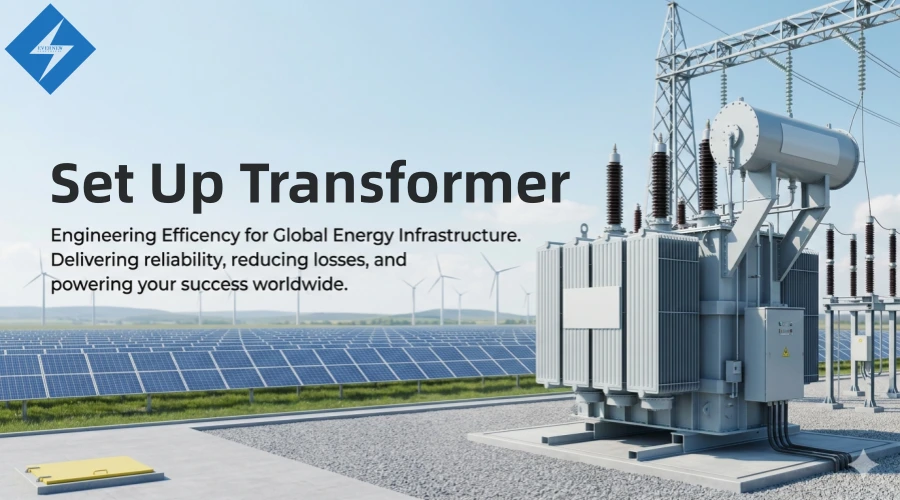
Electric power systems rely heavily on the transformador elevador to transmit electricity efficiently across long distances. From renewable energy plants and industrial facilities to national transmission grids, these transformers play a critical role in increasing voltage, reducing transmission losses, and improving overall grid stability.
In this comprehensive guide, we analyze the technical mechanics, diverse types, and selection criteria for high-performance step up transformers, and why Transformador Evernew is the preferred partner for global energy infrastructure projects.
1. What Is a Step Up Transformer?
A transformador elevador is a static electrical device designed to increase voltage from the primary winding to the secondary winding through electromagnetic induction. By converting low-voltage electricity into a higher-voltage output, it facilitates efficient long-distance power transmission.
Key Technical Characteristics:
- Voltage Transformation: Secondary voltage (Vs) > Primary voltage (Vp).
- Winding Ratio: The secondary winding has more turns (Ns) than the primary winding (Np).
- Current Relationship: As voltage increases, current decreases proportionally, maintaining the conservation of power (P = V × I).
2. How Does a Step Up Transformer Work?
The operation of a step up transformer is governed by Faraday’s Law of Induction. When alternating current (AC) flows through the primary coil, it creates a varying magnetic flux in the laminated steel core. This flux induces a voltage in the secondary coil.
The relationship is defined by the transformer turns ratio:

Why High Voltage is Essential for Transmission
Without stepping up voltage, energy loss due to conductor resistance would be catastrophic. According to Joule’s Law:

By utilizing a transformador elevador to increase voltage, the current (I) is reduced. Since power loss is proportional to the square of the current, even a modest increase in voltage leads to a massive gain in transmission efficiency.
3. Critical Applications in Modern Energy
Step up transformers are the “heart” of power generation and transmission.
Solar and Wind Renewable Energy
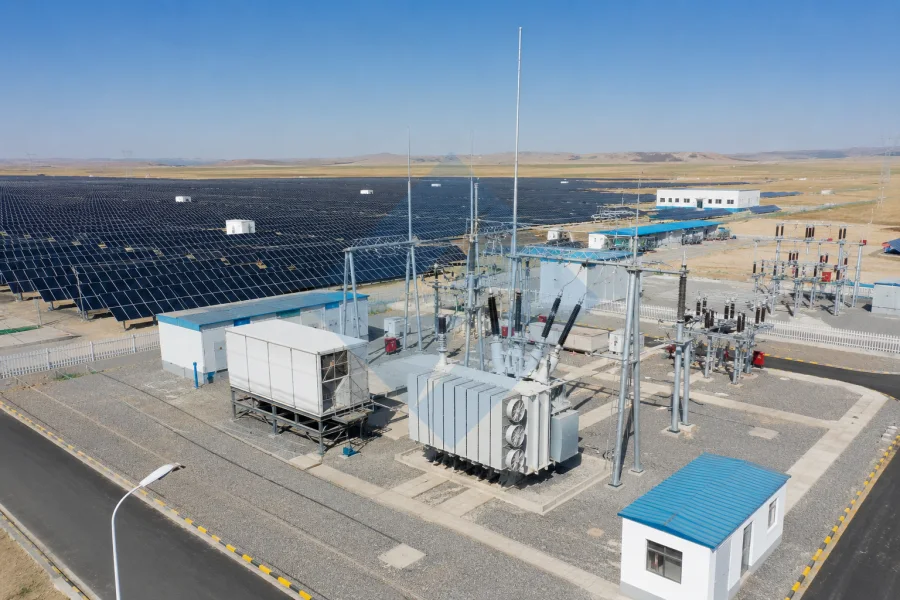
- Solar Farms: Stepping up inverter output (e.g., 800V) to collector system voltages (35kV).
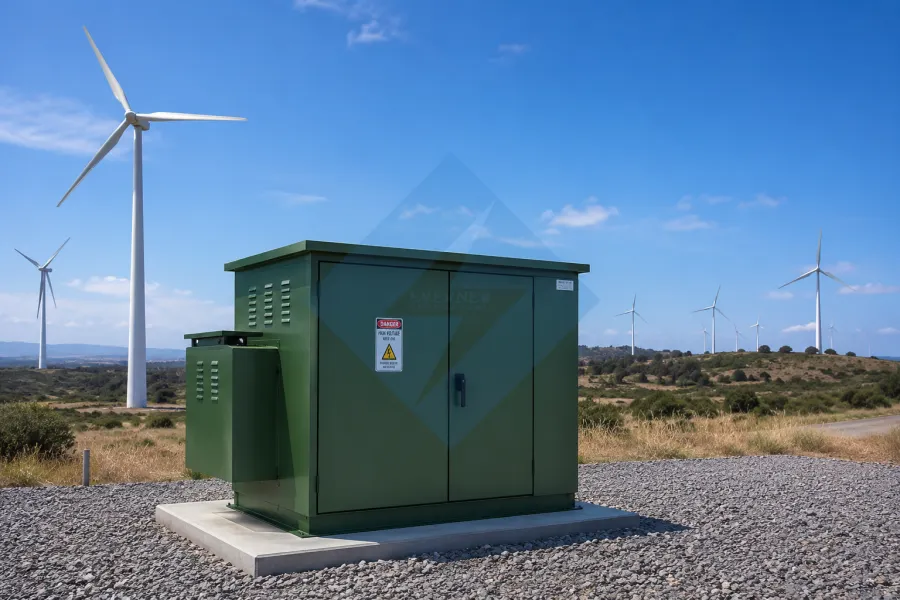
- Wind Turbines: Designed to withstand harmonic distortion and harsh environments, stepping up 690V to medium-voltage grids.
Generator Step Up (GSU) Transformers
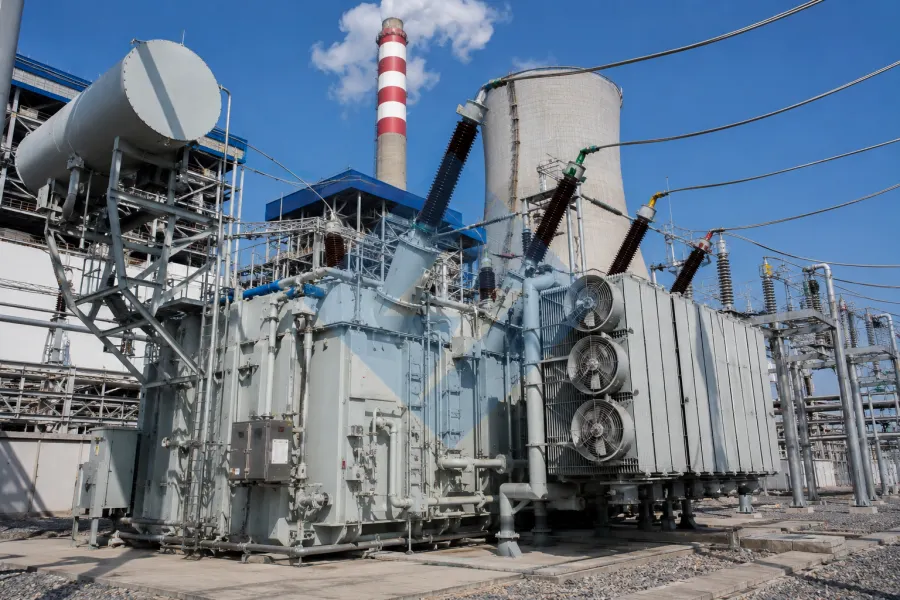
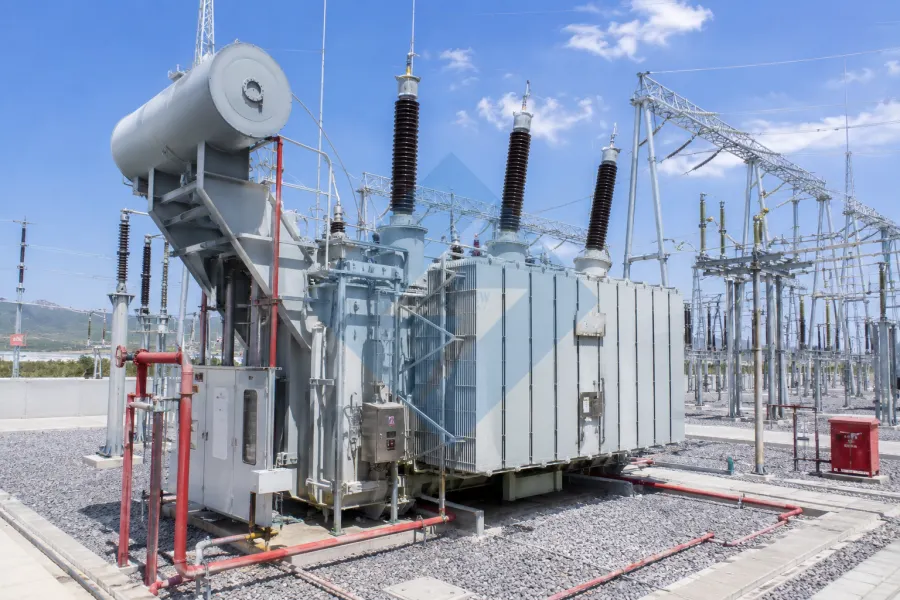
Commonly located at thermal, hydro, and nuclear power plants, GSU transformers (also known as Main Step-up Transformers) raise the generator’s output (typically 11kV–25kV) to transmission levels such as 220kV or 500kV.
Industrial & Utility Substations
Large-scale industrial plants (Steel, Mining, Oil & Gas) use step up units to stabilize power delivery for high-torque machinery and long-range onsite distribution.
4. Types of Step Up Transformers
Choosing the right insulation and cooling method is vital for operational longevity.
| Tipo de transformador | Core Advantages | Typical Use Cases |
|---|---|---|
| Inmerso en aceite | Superior cooling, high dielectric strength, and 30+ year lifespan. | Utility grids, large-scale solar/wind, GSU. |
| Dry-Type (Cast Resin) | Fire-resistant, environmentally friendly, low maintenance. | Indoor substations, hospitals, high-rise buildings. |
| Montaje en almohadilla | Compact, tamper-proof enclosure, easy installation. | Renewable energy sites, underground distribution. |
| Three-Phase | Cost-effective, high efficiency, balanced load distribution. | Industrial and commercial power systems. |
5. Step Up vs. Step Down Transformer: Key Differences
| Característica | Transformador elevador | Transformador reductor |
|---|---|---|
| Voltage Change | Low to High | High to Low |
| Current Change | High to Low | Low to High |
| Secondary Turns | More than Primary (Ns > Np) | Fewer than Primary (Ns < Np) |
| Primary Location | Power Plants / Renewables | Distribution Substations / End Users |
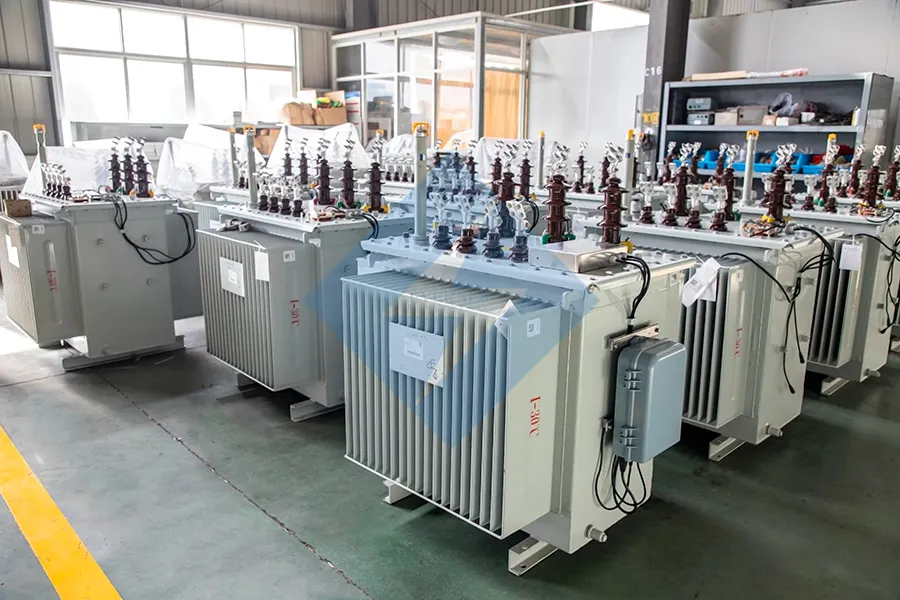
6. How to Choose the Right Manufacturer
For utility-scale projects, the transformer’s reliability directly impacts the ROI. Consider the following:
- Efficiency & Losses: Look for low no-load and load-loss designs to minimize TCO (Total Cost of Ownership).
- Cooling Standards: Ensure the cooling system (ONAN, ONAF, etc.) is rated for your local ambient temperature.
- Compliance: Verify certifications such as IEC 60076, ANSI/IEEE C57.12, CE, and CSA.
- Short-Circuit Withstand: The unit must be engineered to survive rigorous fault conditions.
7. Why Evernew Transformer is the Global Industry Leader
As a premier transformer manufacturer in China, Transformador Evernew specializes in high-voltage engineering for the most demanding global markets.
- High-Voltage Expertise: We manufacture power transformers up to 500kV, including specialized GSU and renewable energy units.
- Advanced Manufacturing: Our 500+ acre facility utilizes automated production lines and precision testing labs.
- Cumplimiento global: Engineered to meet North American (ANSI/IEEE) y European (IEC) standards, ensuring seamless grid integration.
- Quality Assurance: Every unit undergoes rigorous routine and type testing (including impulse and temperature rise tests) before shipment.
Whether you are an EPC contractor or a utility developer, Evernew provides customized, high-efficiency solutions to power your success.
Preguntas más frecuentes (FAQ)
- What is the efficiency of an Evernew Step Up Transformer?
Our units typically achieve over 99% efficiency, exceeding international energy-saving standards. - Can a step up transformer be used for wind power?
Yes, we provide specialized wind farm transformers with enhanced insulation to handle fluctuating loads. - What is the lead time for a 110kV transformer?
Lead times vary by specification, but our optimized manufacturing process ensures industry-leading delivery schedules.
