
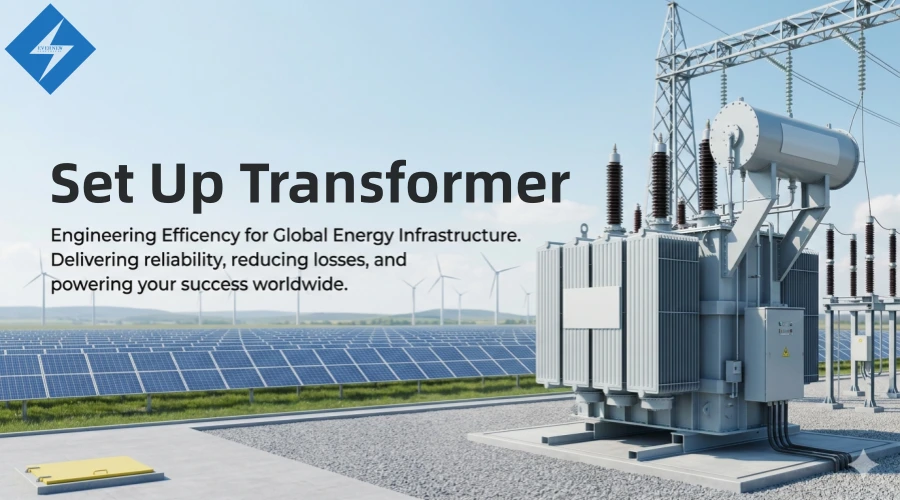
Electric power systems rely heavily on the step up transformer to transmit electricity efficiently across long distances. From renewable energy plants and industrial facilities to national transmission grids, these transformers play a critical role in increasing voltage, reducing transmission losses, and improving overall grid stability.
In this comprehensive guide, we analyze the technical mechanics, diverse types, and selection criteria for high-performance step up transformers, and why Trasformatore Evernew is the preferred partner for global energy infrastructure projects.
1. What Is a Step Up Transformer?
A step up transformer is a static electrical device designed to increase voltage from the primary winding to the secondary winding through electromagnetic induction. By converting low-voltage electricity into a higher-voltage output, it facilitates efficient long-distance power transmission.
Key Technical Characteristics:
- Voltage Transformation: Secondary voltage (Vs) > Primary voltage (Vp).
- Winding Ratio: The secondary winding has more turns (Ns) than the primary winding (Np).
- Current Relationship: As voltage increases, current decreases proportionally, maintaining the conservation of power (P = V × I).
2. How Does a Step Up Transformer Work?
The operation of a step up transformer is governed by Faraday’s Law of Induction. When alternating current (AC) flows through the primary coil, it creates a varying magnetic flux in the laminated steel core. This flux induces a voltage in the secondary coil.
The relationship is defined by the transformer turns ratio:

Why High Voltage is Essential for Transmission
Without stepping up voltage, energy loss due to conductor resistance would be catastrophic. According to Joule’s Law:

By utilizing a step up transformer to increase voltage, the current (I) is reduced. Since power loss is proportional to the square of the current, even a modest increase in voltage leads to a massive gain in transmission efficiency.
3. Critical Applications in Modern Energy
Step up transformers are the “heart” of power generation and transmission.
Solar and Wind Renewable Energy
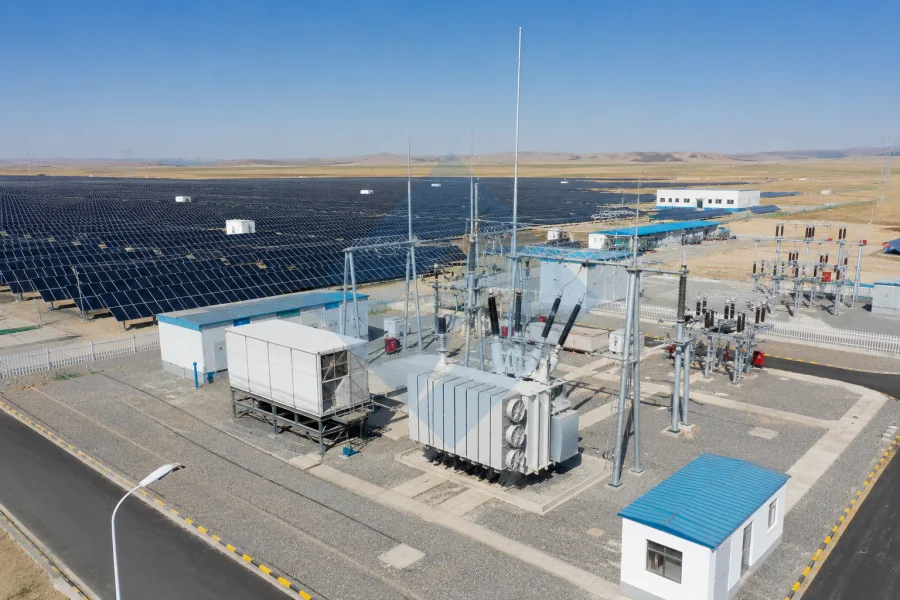
- Solar Farms: Stepping up inverter output (e.g., 800V) to collector system voltages (35kV).
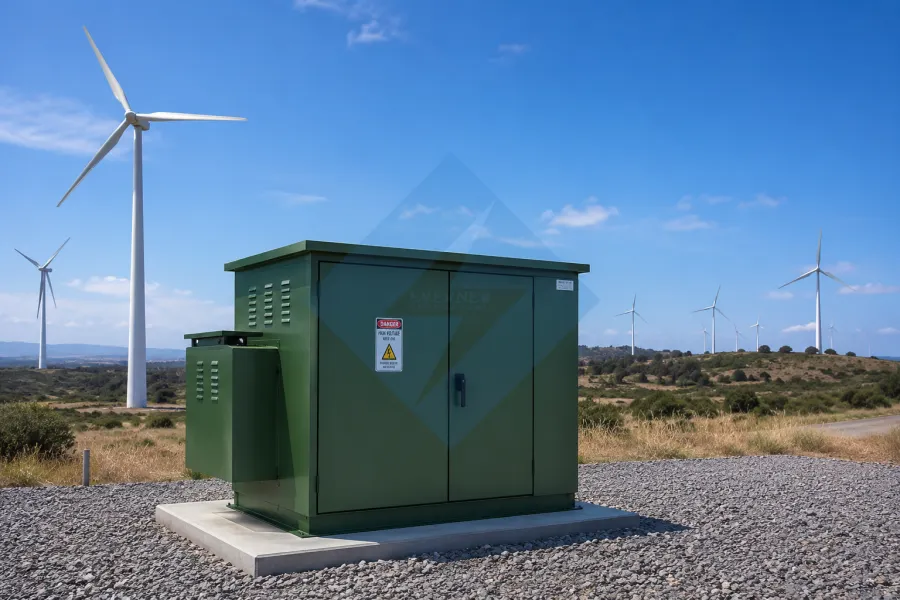
- Wind Turbines: Designed to withstand harmonic distortion and harsh environments, stepping up 690V to medium-voltage grids.
Generator Step Up (GSU) Transformers
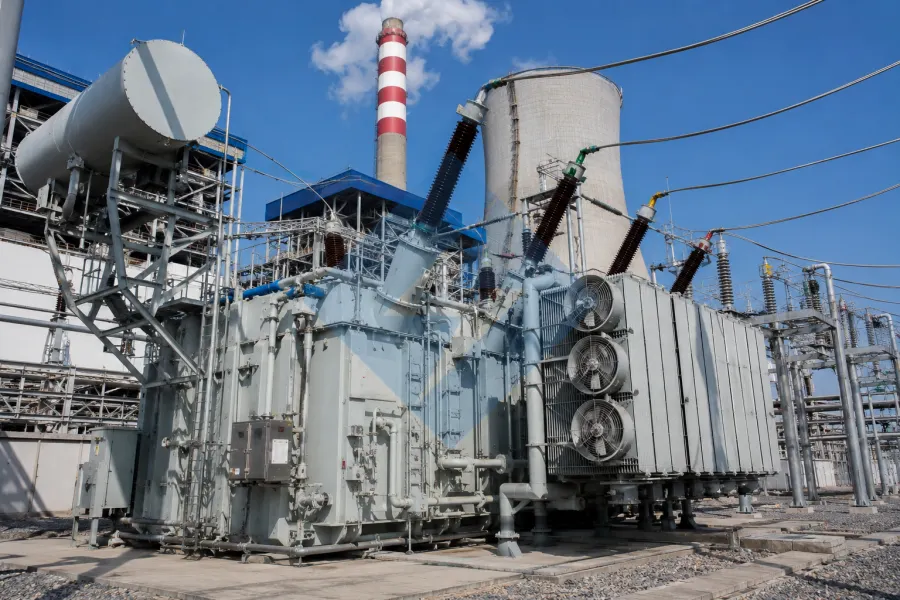
Commonly located at thermal, hydro, and nuclear power plants, GSU transformers (also known as Main Step-up Transformers) raise the generator’s output (typically 11kV–25kV) to transmission levels such as 220kV or 500kV.
Industrial & Utility Substations
Large-scale industrial plants (Steel, Mining, Oil & Gas) use step up units to stabilize power delivery for high-torque machinery and long-range onsite distribution.
4. Types of Step Up Transformers
Choosing the right insulation and cooling method is vital for operational longevity.
| Tipo di trasformatore | Core Advantages | Typical Use Cases |
|---|---|---|
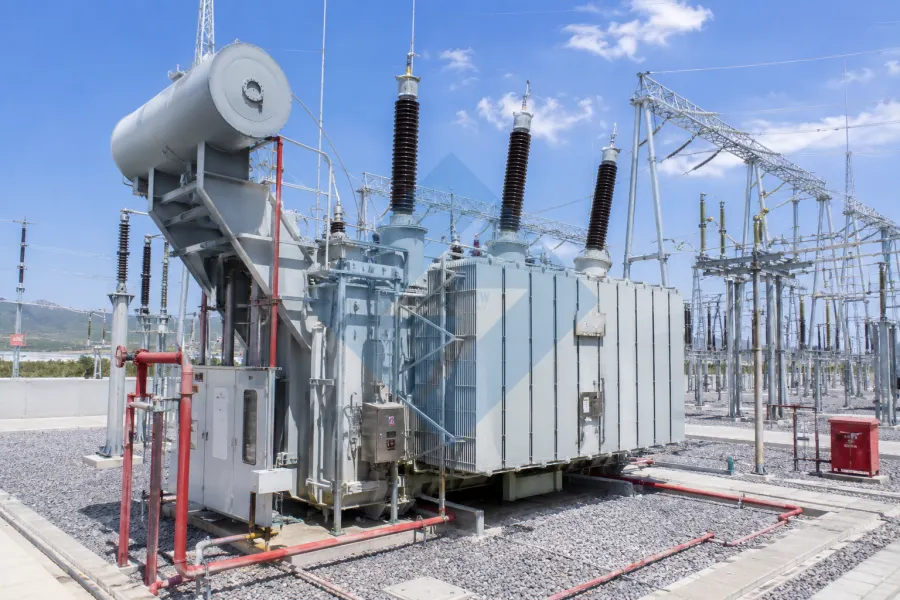
| Immersi nell'olio | Superior cooling, high dielectric strength, and 30+ year lifespan. | Utility grids, large-scale solar/wind, GSU. |
| Dry-Type (Cast Resin) | Fire-resistant, environmentally friendly, low maintenance. | Indoor substations, hospitals, high-rise buildings. |
| Montato a tampone | Compact, tamper-proof enclosure, easy installation. | Renewable energy sites, underground distribution. |
| Three-Phase | Cost-effective, high efficiency, balanced load distribution. | Industrial and commercial power systems. |
5. Step Up vs. Step Down Transformer: Key Differences
| Caratteristica | Trasformatore step up | Trasformatore step-down |
|---|---|---|
| Voltage Change | Low to High | High to Low |
| Current Change | High to Low | Low to High |
| Secondary Turns | More than Primary (Ns > Np) | Fewer than Primary (Ns < Np) |
| Primary Location | Power Plants / Renewables | Distribution Substations / End Users |
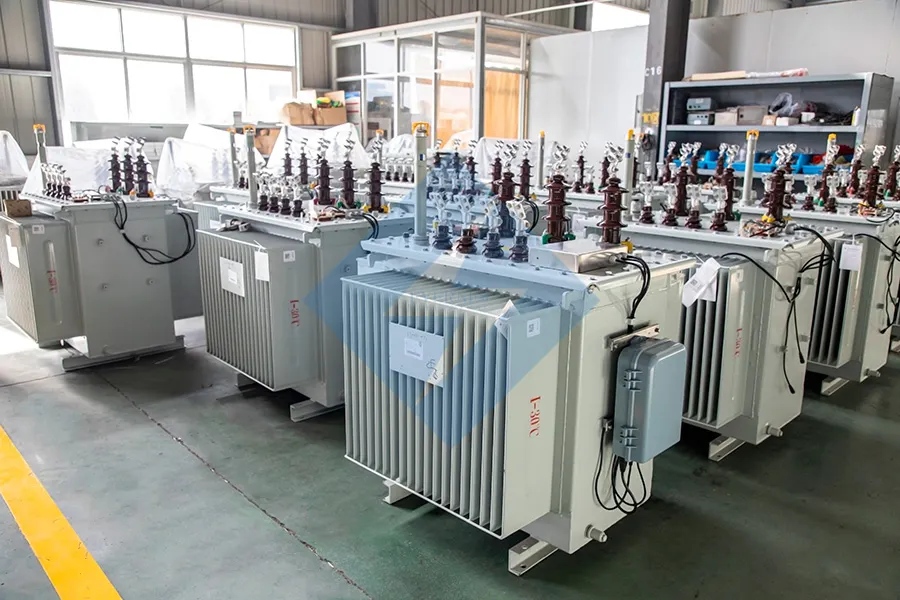
6. How to Choose the Right Manufacturer
For utility-scale projects, the transformer’s reliability directly impacts the ROI. Consider the following:
- Efficiency & Losses: Look for low no-load and load-loss designs to minimize TCO (Total Cost of Ownership).
- Cooling Standards: Ensure the cooling system (ONAN, ONAF, etc.) is rated for your local ambient temperature.
- Compliance: Verify certifications such as IEC 60076, ANSI/IEEE C57.12, CE, and CSA.
- Short-Circuit Withstand: The unit must be engineered to survive rigorous fault conditions.
7. Why Evernew Transformer is the Global Industry Leader
As a premier transformer manufacturer in China, Trasformatore Evernew specializes in high-voltage engineering for the most demanding global markets.
- High-Voltage Expertise: We manufacture power transformers up to 500kV, including specialized GSU and renewable energy units.
- Advanced Manufacturing: Our 500+ acre facility utilizes automated production lines and precision testing labs.
- Conformità globale: Engineered to meet North American (ANSI/IEEE) e European (IEC) standards, ensuring seamless grid integration.
- Quality Assurance: Every unit undergoes rigorous routine and type testing (including impulse and temperature rise tests) before shipment.
Whether you are an EPC contractor or a utility developer, Evernew provides customized, high-efficiency solutions to power your success.
Domande frequenti (FAQ)
- What is the efficiency of an Evernew Step Up Transformer?
Our units typically achieve over 99% efficiency, exceeding international energy-saving standards. - Can a step up transformer be used for wind power?
Yes, we provide specialized wind farm transformers with enhanced insulation to handle fluctuating loads. - What is the lead time for a 110kV transformer?
Lead times vary by specification, but our optimized manufacturing process ensures industry-leading delivery schedules.
