The global transformer industry is entering a major period of expansion. Power grid modernization, renewable energy integration, AI data centers, battery energy storage systems (BESS), industrial electrification, electric transportation, and new transmission infrastructure are increasing demand for transformers worldwide.
For utilities, EPC contractors, electrical distributors, renewable energy developers, data center operators, mining companies, and industrial buyers, selecting the right transformer manufacturer involves much more than comparing transformer prices.
Transformer capacity, voltage class, applicable standards, manufacturing capability, testing facilities, customization, delivery schedule, project experience, and after-sales support can all determine whether a supplier is suitable for a particular project.
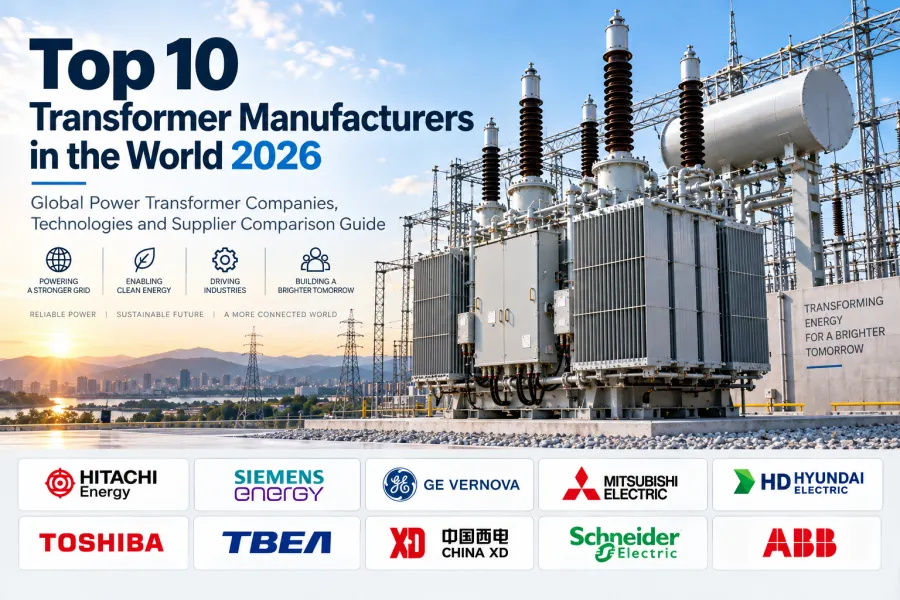
This guide introduces 10 major transformer manufacturers in the world in 2026, compares their transformer products, representative technical capabilities, applications, and market focus, and explains what buyers should consider when selecting a transformer supplier.
We also discuss when international buyers may consider alternative transformer manufacturers for customized power and distribution projects.
Important Note: This article is an industry and sourcing comparison rather than an official market-share ranking. Transformer manufacturers operate different factories and product lines, so technical capabilities may vary by product, manufacturing location, project specification, and year.
Key Takeaways
The world’s leading transformer manufacturers do not all compete in exactly the same markets. Some specialize in EHV, UHV and HVDC transmission, while others have stronger positions in distribution transformers, dry-type transformers, industrial systems or integrated electrical distribution.
Major international manufacturers can provide transformer solutions ranging from relatively small distribution units to power transformers exceeding 1,000 MVA for specialized grid applications. For example, Hitachi Energy publicly lists system intertie transformers up to 1,300 MVA and primary voltages up to 765 kV and higher, while GE Vernova publishes a broader power-transformer portfolio extending to 1,200 kV AC, ±1,100 kV DC and very large project-specific ratings. Hitachi Energy
For buyers, the right supplier depends on transformer type, rated power, primary and secondary voltage, applicable standards, testing requirements, installation environment, customization, lead time and project location.
Top 10 Transformer Manufacturers in the World – 2026 Overview
| Manufacturer | Headquarters | Main Transformer Focus | Typical Applications |
|---|---|---|---|
| Hitachi Energy | Switzerland | Power, HVDC, distribution, traction & special transformers | Utilities, HVDC, transmission, renewable energy |
| Siemens Energy | Germany | Large power, GSU, phase-shifting & special transformers | Transmission, generation, renewable energy |
| GE Vernova | United States | Power, GSU, autotransformers, HVDC & special transformers | Utility, generation, transmission |
| Mitsubishi Electric | Japan | Large power & transmission transformers | Utility, generation, substations |
| HD Hyundai Electric | South Korea | Power, distribution & special transformers | Utility, industrial, renewable energy |
| Toshiba Energy Systems & Solutions | Japan | Power & transmission transformers | Utility, generation, infrastructure |
| TBEA | China | UHV, HVDC & large power transformers | UHV transmission, utility, renewable energy |
| China XD Electric | China | UHV, EHV & large power transformers | Transmission, generation, substations |
| Schneider Electric | France | Dry-type & distribution transformers | Data centers, buildings, industry |
| ABB* | Switzerland | Historical power-grid and transformer technology | Historical grid, industrial & electrical systems |
ABB Note: ABB completed the divestment of 80.1% of its Power Grids business to Hitachi in July 2020; that business ultimately became Hitachi Energy. Therefore, ABB’s historical large-transformer portfolio and today’s Hitachi Energy business should not be interpreted as two independent current large-power-transformer businesses. ABB Group
1. Hitachi Energy
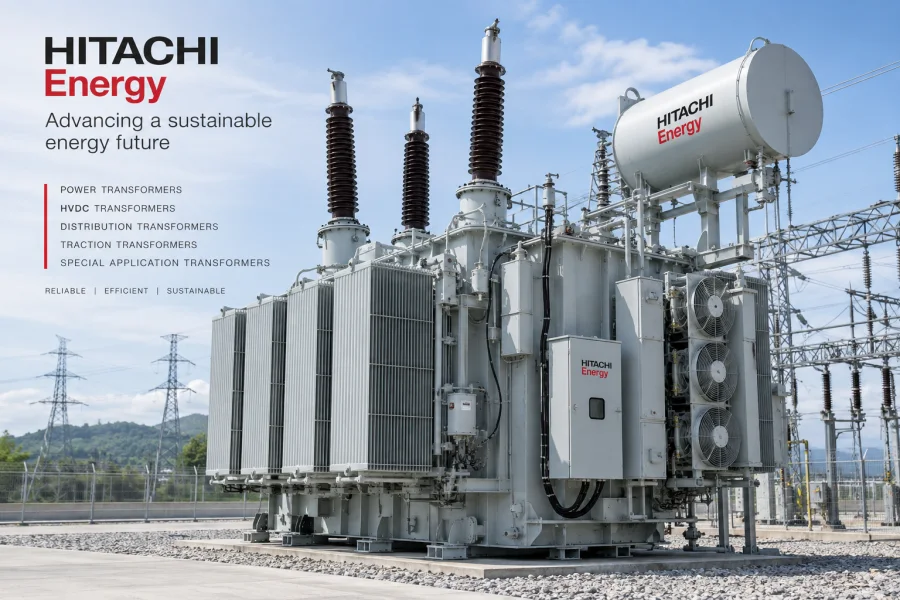

Hitachi Energy is one of the world’s leading power and transformer technology companies, serving electric utilities, power generation companies, renewable energy developers, industrial facilities, transportation networks, and major infrastructure projects. With extensive expertise in high-voltage engineering, grid integration, insulation technology, and digital asset management, the company provides transformer solutions for applications ranging from distribution networks to ultra-high-voltage transmission systems.
Its transformer portfolio covers large power transformers, generator step-up transformers, system intertie transformers, HVDC converter transformers, autotransformers, distribution transformers, dry-type transformers, traction transformers, and specialized industrial transformers. Hitachi Energy also develops application-specific solutions for renewable energy integration, offshore wind, marine environments, and other demanding operating conditions.
Main Transformer Products and Technologies
Large Power and Ultra-High-Voltage Transformers
Hitachi Energy manufactures large power transformers for transmission networks, major substations, power plants, and industrial facilities. Its portfolio includes system intertie transformers, generator step-up transformers, autotransformers, and HVDC converter transformers designed to support high-capacity power transmission and reliable grid operation.
Dry-Type Transformers
The company’s HiDry™ dry-type transformer portfolio extends dry-type technology into higher-capacity and higher-voltage applications. The published HiDry72 range reaches up to 63 MVA and 72.5 kV, making it suitable for selected applications where fire safety, environmental considerations, and reduced reliance on liquid insulation are important.
EconiQ™ Sustainable Transformer Solutions
EconiQ™ is Hitachi Energy’s eco-efficient portfolio, developed to reduce environmental impact while maintaining high performance and reliability. Depending on the application and product configuration, these solutions can incorporate alternative insulating fluids, reduced environmental footprints, and design approaches informed by life-cycle assessment.
OceaniQ™ Offshore and Marine Solutions
OceaniQ™ addresses the demanding conditions of offshore and marine energy applications, including offshore wind installations and other environments exposed to moisture, salt, vibration, and challenging operating conditions. Transformer configurations are tailored to the requirements of the specific installation.
TXpert™ Digital Transformer Solutions
TXpert™ brings digital monitoring, data analysis, and asset-management capabilities to transformer installations. Depending on the equipment and configuration, these capabilities help operators assess transformer condition, identify emerging issues, and make more informed maintenance decisions.
TXpand™ Transformer Safety Technology
TXpand™ is designed to improve transformer safety by enhancing the tank’s ability to withstand the mechanical stresses associated with internal faults. This technology can help mitigate the consequences of certain fault events, supporting improved personnel and asset protection in critical installations.
Representative Technical Capabilities
| Technical Category | Published or Representative Capability |
|---|---|
| Large power transformers | Up to 1,300 MVA for selected published product ranges |
| System intertie transformers | Up to 765 kV and higher for certain applications |
| Shell-form transformers | Published ranges up to 1,300 MVA and 765 kV |
| Dry-type transformers | HiDry72 range up to 63 MVA and 72.5 kV |
| Transformer configurations | Single-phase and three-phase, depending on application |
| Operating frequencies | 50 Hz and 60 Hz, depending on product |
| Specialized technologies | HVDC, GSU, digital monitoring, eco-efficient insulation, offshore applications, and enhanced fault-safety designs |
Note: The ratings above refer to specific published product ranges and applications, not every transformer manufactured by Hitachi Energy. Final ratings, cooling arrangements, insulation systems, and configurations depend on the project requirements.
Key Competitive Strengths
Hitachi Energy’s competitive strengths include its expertise in ultra-high-voltage power transmission, large transformer engineering, HVDC technology, advanced insulation systems, digital transformer monitoring, and global project support. Its portfolio combines established transformer engineering with solutions designed to address grid modernization, renewable energy integration, operational reliability, and environmental performance.
The company also provides life-cycle services, including installation support, maintenance, condition assessment, upgrades, and replacement solutions, helping customers manage transformer performance throughout the equipment’s service life.
Typical Applications
High-voltage and ultra-high-voltage transmission networks
HVDC converter stations and major substations
Power plants and generator step-up systems
Solar farms, wind farms, and offshore wind projects
Industrial plants, data centers, and critical infrastructure
Rail transportation and specialized electrical systems
Applications requiring digital monitoring, enhanced safety, or eco-efficient transformer solutions
2. Siemens Energy
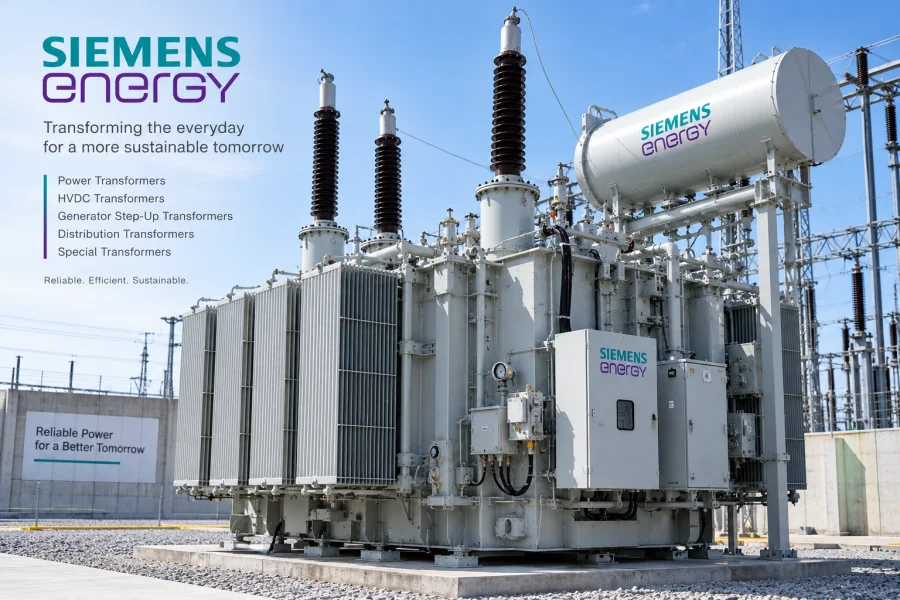

Siemens Energy is a major global energy technology company and a leading supplier of power transformers and grid infrastructure solutions. The company serves electric utilities, power generation companies, renewable energy developers, industrial operators, and transmission system operators worldwide.
Its transformer portfolio supports a broad range of applications, from conventional power generation and industrial power systems to high-voltage transmission, grid interconnections, renewable energy integration, and railway electrification. Siemens Energy combines transformer engineering with expertise in transmission systems, grid stabilization, protection, and control technologies, making it particularly relevant to complex energy infrastructure projects.
Main Transformer Products and Technologies
Large Power Transformers
Siemens Energy manufactures large power transformers for transmission networks, major substations, power plants, and industrial facilities. These transformers are designed for demanding operating conditions, high power ratings, and reliable long-term service in critical electrical infrastructure.
Generator Step-Up Transformers
Generator step-up (GSU) transformers connect power generators to transmission networks by raising generator output voltage to the level required for efficient power transmission. They are used in conventional power plants and renewable energy installations, with designs tailored to generator characteristics, network requirements, and project operating conditions.
Autotransformers and Grid Transformers
Autotransformers and grid transformers support voltage transformation, network interconnection, and power transfer between transmission systems. They are important components in high-voltage substations where reliability, efficient operation, and effective use of substation space are key considerations.
Phase-Shifting Transformers
Phase-shifting transformers (PSTs) regulate active power flow between interconnected transmission lines by adjusting the phase angle between their input and output voltages. This helps operators manage power flows, reduce network congestion, and improve grid flexibility.
A notable Siemens Energy reference is its supply of phase-shifting transformers for TenneT, with published ratings of 1,420 MVA at 410 kV. This demonstrates the company’s experience with high-capacity transformer solutions for demanding transmission applications.
HVDC and High-Voltage Transmission Transformers
Transformers used in high-voltage direct current (HVDC) transmission systems are designed to meet the demanding electrical and insulation requirements of converter stations. They support efficient long-distance power transmission and the interconnection of electrical grids, including systems used to integrate renewable energy resources.
CAREPOLE™ Dry-Type Transformers
CAREPOLE™ is associated with Siemens Energy’s dry-type transformer offerings for selected distribution and infrastructure applications. Dry-type designs can be advantageous where fire safety, reduced liquid-insulation requirements, and environmental considerations are important. Product suitability depends on the required voltage, capacity, installation conditions, and the specific product range available in the target market.
GEAFOL Cast-Resin Transformers
GEAFOL is Siemens’ established cast-resin dry-type transformer product family. These transformers use solid resin insulation and are designed for applications where fire safety, mechanical strength, and reduced reliance on liquid insulating materials are important. Typical applications include commercial buildings, industrial facilities, infrastructure, and selected renewable energy installations.
Fluid-Immersed Transformers and Alternative Insulating Fluids
In addition to conventional mineral-oil designs, Siemens Energy offers transformer solutions using alternative insulating fluids for selected applications. Ester fluids can offer benefits such as higher fire points and, depending on the fluid formulation, improved biodegradability. Actual performance and environmental benefits depend on the insulating fluid, transformer design, and operating conditions.
Traction and Industrial Transformers
Siemens Energy also supplies specialized transformers for railway electrification and industrial power systems. Traction transformers are designed around the demanding space, weight, thermal, and operational requirements of rail vehicles. Industrial transformer solutions are tailored to the electrical loads, environmental conditions, and reliability requirements of specific industrial applications.
Digital Transformer Technology: Sensformer®
Sensformer® is Siemens’ digital transformer concept, designed to make relevant transformer operating data available for monitoring and asset management. Depending on the configuration, instrumentation can provide information about parameters such as temperature, oil level, and electrical operating conditions.
These capabilities help operators monitor transformer status, improve maintenance planning, and make more informed asset-management decisions. Digital functionality and available measurements vary by product configuration.
Representative Technical Capabilities
| Technical Category | Representative Capability |
|---|---|
| Large power transformers | Designed for utility, generation, and major industrial applications |
| Phase-shifting transformers | Published reference of 1,420 MVA at 410 kV for TenneT |
| High-voltage power transformers | Published project example rated 420 kV / 400 MVA |
| Transformer configurations | Power transformers, GSU units, autotransformers, PSTs, and specialized designs |
| Insulation options | Mineral oil and alternative ester fluids for selected designs |
| Cooling arrangements | Natural and forced cooling, depending on the design |
| Digital capabilities | Monitoring and asset-management functions through configured digital solutions |
Note: The ratings above refer to specific published projects and product applications. They should not be interpreted as universal maximum ratings for every Siemens Energy transformer family or manufacturing location. Final specifications depend on the project, applicable standards, cooling system, and customer requirements.
Key Competitive Strengths
Siemens Energy’s main strengths include large power transformer engineering, high-voltage transmission technology, phase-shifting applications, and the integration of transformers into broader grid infrastructure.
Its experience with complex transmission projects is particularly relevant where transformer performance must be coordinated with other electrical equipment, grid protection, control systems, and network-stabilization requirements. The company also addresses changing industry priorities through digital monitoring, alternative insulating fluids, and transformer solutions for renewable energy integration.
Typical Applications
High-voltage and extra-high-voltage transmission networks
Large substations and grid interconnections
Power plants and generator step-up systems
HVDC converter stations
Transmission network congestion management and power-flow control
Solar farms, wind farms, and renewable energy infrastructure
Railway electrification and traction power systems
Industrial plants and critical infrastructure
3. GE Vernova
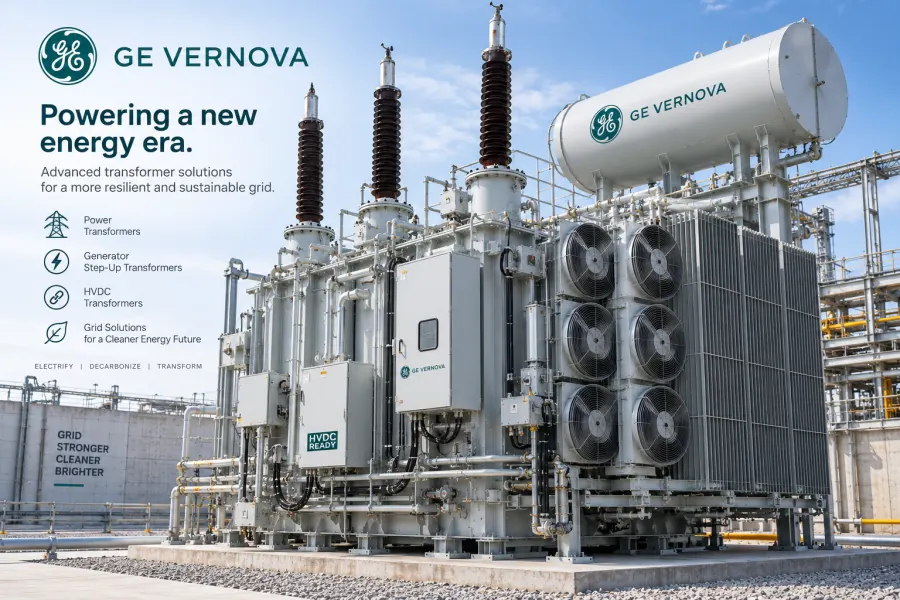

GE Vernova is a major global energy technology company providing equipment and solutions for power generation, electricity transmission, distribution, and grid modernization. Its Electrification business serves utilities, power producers, renewable energy developers, and industrial customers with technologies designed to support reliable electricity delivery and the evolving requirements of modern power systems.
Building on a long history of transformer engineering, GE Vernova offers a broad portfolio of power transformers for applications ranging from conventional generation and utility substations to ultra-high-voltage transmission, HVDC systems, and specialized industrial installations. Its transformer capabilities include large power transformer engineering, high-voltage insulation systems, power-flow control, and solutions designed for demanding grid operating conditions.
Main Transformer Products and Technologies
Large Power Transformers
GE Vernova supplies large power transformers for transmission networks, major substations, power plants, and industrial facilities. These transformers are engineered for high electrical ratings, reliable operation, and demanding service conditions. Depending on the product family and project requirements, designs can support applications ranging from conventional high-voltage networks to ultra-high-voltage transmission systems.
Generator Step-Up Transformers
Generator step-up (GSU) transformers increase the voltage produced by generators to the level required for transmission and grid interconnection. They are used in thermal power plants, hydroelectric facilities, and selected renewable energy installations. Their design must account for generator characteristics, load cycles, fault conditions, and the operating requirements of the connected power system.
Autotransformers
Autotransformers provide efficient voltage transformation between interconnected high-voltage networks. Compared with conventional two-winding transformers in suitable applications, they can offer advantages in material use, size, and efficiency. GE Vernova’s published portfolio includes autotransformers rated up to 1,200 MVA and 765 kV, depending on the product configuration.
HVDC Converter Transformers
HVDC converter transformers are essential components of high-voltage direct current transmission systems. They interface AC networks with converter equipment, supporting long-distance electricity transmission, asynchronous grid interconnection, and the integration of remote renewable energy resources.
GE Vernova’s transformer portfolio supports demanding HVDC applications, including projects involving very high DC transmission voltages. Its published portfolio references voltage applications up to ±1,100 kV DC, although actual transformer ratings and configurations depend on the converter technology and project design.
Phase-Shifting Transformers
Phase-shifting transformers (PSTs) regulate active power flow through transmission networks by adjusting the phase angle between their input and output voltages. They can help manage congestion, balance loading between parallel transmission paths, and improve network flexibility.
GE Vernova’s published transformer portfolio includes phase-shifting solutions with ratings reaching 2,750 MVA for selected applications, demonstrating its capabilities in high-capacity power-flow control.
Static Var Compensator Transformers
Transformers used in static var compensator (SVC) installations interface with reactive-power compensation equipment. They support voltage regulation and power-quality management by enabling the electrical connection of compensation systems to the grid. These transformers are designed around the electrical, thermal, and operating requirements of the associated SVC installation.
Industrial and Specialized Transformers
GE Vernova also addresses specialized transformer requirements in industrial power systems and other demanding applications. These solutions are designed around customer-specific voltage levels, load characteristics, environmental conditions, and grid connection requirements.
Energy-Efficient and Environmentally Considerate Transformer Solutions
Transformer efficiency and environmental performance are increasingly important in modern grid projects. Depending on the design and product range, relevant approaches can include reduced no-load and load losses, alternative insulating fluids, and design choices that improve operational efficiency or reduce environmental risks. Specific sustainability benefits should be evaluated against the technical documentation for the selected transformer.
Representative Technical Capabilities
| Technical Category | Published or Representative Capability |
|---|---|
| Overall power transformer portfolio | Published ratings from approximately 5 MVA to 2,750 MVA across selected applications |
| High-voltage AC applications | Portfolio references up to 1,200 kV AC |
| HVDC applications | Portfolio references up to ±1,100 kV DC |
| Large power transformers | Published product range includes ratings up to 1,000 MVA for specified designs |
| Autotransformers | Up to 1,200 MVA / 765 kV for selected product configurations |
| Generator step-up transformers | Published ratings up to 1,000 MVA for selected designs |
| Phase-shifting transformers | Published ratings up to 2,750 MVA for selected applications |
| Specialized technologies | HVDC, power-flow control, SVC applications, and industrial transformer solutions |
Note: These figures represent published portfolio capabilities and selected product ranges, not a universal rating applicable to every transformer type. AC voltage, DC transmission voltage, transformer winding voltage, and project power rating are different technical parameters and should not be treated as interchangeable. Final specifications depend on the selected design, cooling system, insulation requirements, and project conditions.
Key Competitive Strengths
GE Vernova’s strengths include large power transformer engineering, experience with demanding high-voltage applications, HVDC-related technologies, and specialized solutions for transmission network operation.
Its portfolio is particularly relevant to projects where transformer performance must be coordinated with converter stations, reactive-power compensation systems, power-flow control equipment, and wider grid infrastructure. These capabilities support transmission expansion, renewable energy integration, and the modernization of increasingly complex electrical networks.
Typical Applications
High-voltage and ultra-high-voltage transmission networks
Large utility substations and grid interconnections
Thermal, hydroelectric, and other power generation facilities
HVDC converter stations and long-distance transmission links
Renewable energy integration and grid connection
Phase-shifting and transmission congestion management
SVC installations and reactive-power compensation
Industrial power systems and major infrastructure projects
4. Mitsubishi Electric
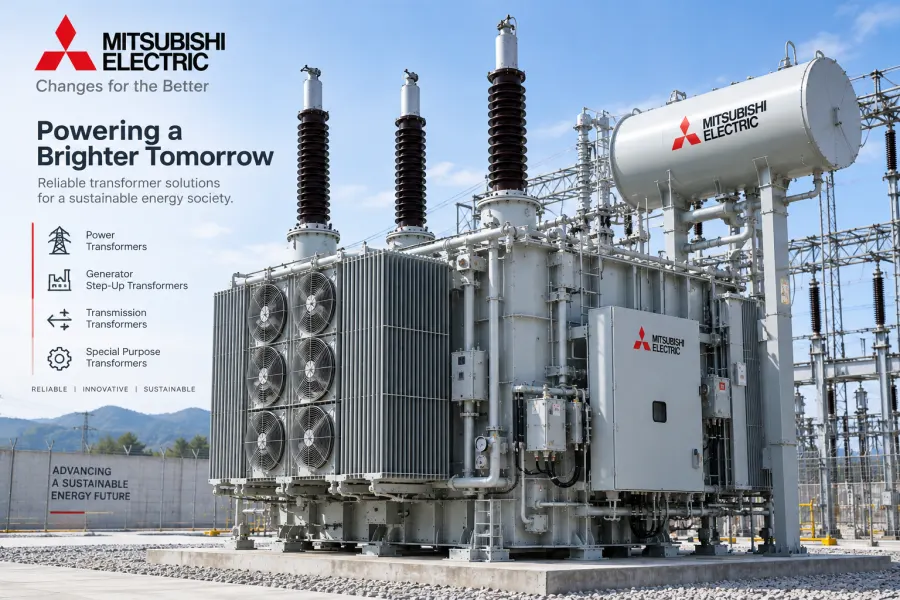

Mitsubishi Electric Corporation is a Japanese electrical and electronic equipment manufacturer with a broad portfolio of technologies for power systems, industrial facilities, and infrastructure. Its electrical engineering expertise is relevant to power generation, transmission, distribution, and high-voltage grid applications.
When evaluating Mitsubishi Electric for transformer projects, buyers should verify the specific transformer models, voltage ratings, capacity ranges, and manufacturing scope through official product documentation.
Key Transformer Products
Power Transformers
Power transformers are essential components in power generation, transmission networks, and utility substations. For large-scale projects, important selection factors include rated capacity (MVA), voltage class, insulation performance, cooling method, short-circuit withstand strength, and compliance with applicable technical standards.
Distribution Transformers
Distribution transformers reduce medium-voltage electricity to levels suitable for commercial, residential, and industrial use. Depending on the confirmed product portfolio, relevant categories may include oil-immersed transformers, dry-type transformers, and compact distribution solutions.
Selection typically depends on rated capacity, voltage ratio, installation environment, energy-efficiency requirements, fire-safety considerations, and indoor or outdoor operating conditions.
Generator Step-Up Transformers and Autotransformers
Generator step-up (GSU) transformers increase generator output voltage for connection to transmission networks. Autotransformers are used in suitable power systems to interconnect different voltage levels. For specific Mitsubishi Electric projects, buyers should confirm the availability of these transformer categories and their applicable technical ratings.
High-Voltage Transformer Applications
High-voltage and extra-high-voltage (EHV) transformer applications require careful consideration of insulation coordination, dielectric performance, thermal management, mechanical strength, and system operating conditions. Actual voltage ratings and available configurations must be verified against official product documentation.
Technical Capabilities and Key Strengths
Energy Efficiency: Transformer efficiency is closely related to no-load losses, load losses, operating conditions, and the applicable energy-efficiency requirements. Buyers should compare guaranteed loss values when evaluating quotations.
Reliability: Insulation systems, cooling arrangements, mechanical strength, manufacturing quality, and routine and type testing are important factors in long-term transformer performance.
Project Customization: Depending on the transformer design, project specifications may include rated capacity, primary and secondary voltage, vector group, impedance, tap changer, winding material, cooling method, enclosure, and accessories.
Environmental Performance: Transformer selection may also consider noise levels, insulation-fluid options, material recyclability, energy consumption, and lifecycle environmental impact.
Typical Applications
Power generation plants and generator step-up systems
High-voltage transmission networks and utility substations
Grid interconnections and electrical infrastructure projects
Industrial plants and manufacturing facilities
Distribution networks serving commercial and residential loads
Renewable energy integration, including solar and wind power projects, where suitable transformer products are available
Mitsubishi Electric — Transformer Manufacturer Overview
| Technical Category | Published or Representative Capability |
|---|---|
| Overall power transformer portfolio | Published ratings from approximately 5 MVA to 2,750 MVA across selected applications |
| High-voltage AC applications | Portfolio references up to 1,200 kV AC |
| HVDC applications | Portfolio references up to ±1,100 kV DC |
| Large power transformers | Published product range includes ratings up to 1,000 MVA for specified designs |
| Autotransformers | Up to 1,200 MVA / 765 kV for selected product configurations |
| Generator step-up transformers | Published ratings up to 1,000 MVA for selected designs |
| Phase-shifting transformers | Published ratings up to 2,750 MVA for selected applications |
| Specialized technologies | HVDC, power-flow control, SVC applications, and industrial transformer solutions |
| Official Website | https://www.mitsubishielectric.com/ |
Summary
Mitsubishi Electric is an established Japanese electrical equipment manufacturer whose wider power-system expertise is relevant to the electricity and infrastructure sector. When comparing transformer suppliers, buyers should evaluate verified product availability, technical ratings, applicable standards, project experience, manufacturing capability, delivery schedules, and after-sales support.
5. HD Hyundai Electric
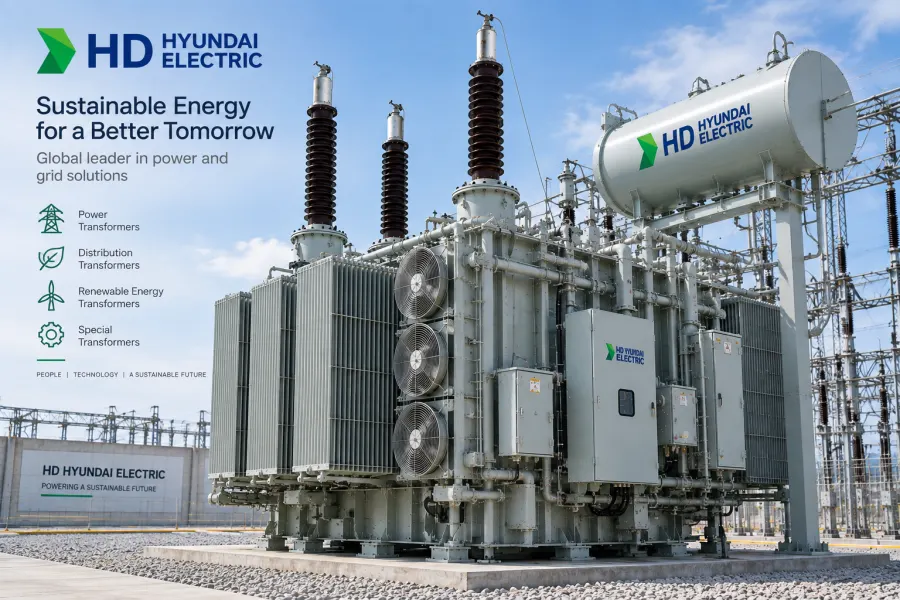

HD Hyundai Electric is a major South Korean manufacturer of electrical equipment, including power transformers, distribution transformers, special-purpose transformers, switchgear, and rotating machinery. Established in 1977 as the Electrical Engineering Division of Hyundai Heavy Industries, the company serves utility, industrial, marine, offshore, and renewable energy markets worldwide.
Key Transformer Products
Power Transformers
HD Hyundai Electric supplies power transformers for power generation, high-voltage transmission networks, and utility substations. These solutions support large-capacity power transmission and grid interconnections. Specific voltage and capacity ratings depend on the product series and project requirements.
Distribution Transformers
Distribution transformer solutions serve commercial, industrial, and utility applications. Relevant product categories include oil-immersed distribution transformers, mold-type transformers, and industrial distribution transformers, subject to the confirmed product range.
Marine and Offshore Transformers
Marine distribution transformers support shipboard and offshore electrical systems, with design considerations including compact construction, insulation performance, environmental resistance, and operational safety.
Special-Purpose and Industrial Transformers
Special transformers may serve industrial plants, electric arc furnace applications, railway systems, and other specialized electrical loads, depending on product availability and technical requirements.
Renewable Energy and Grid Equipment
Transformer applications include wind and solar power integration, utility substations, and grid infrastructure. HD Hyundai Electric also supplies related power equipment, including shunt reactors.
Key Technical Strengths
High-Voltage Engineering: Transformer solutions for utility transmission and high-voltage substations.
Energy Efficiency: Performance evaluated through no-load and load losses.
Reliability: Insulation, cooling, mechanical strength, and testing support dependable operation.
Compact Design: Space-efficient configurations for suitable industrial and marine applications.
Customized Solutions: Specifications tailored to capacity, voltage ratio, frequency, cooling method, impedance, and applicable standards.
Typical Applications
Power generation and utility substations
High-voltage transmission and grid infrastructure
Industrial plants and manufacturing facilities
Electric arc furnaces and railway systems, where suitable products are available
Marine and offshore electrical systems
Wind farms, solar power projects, and renewable energy integration
HD Hyundai Electric — Transformer Manufacturer Overview
| Parameter | Details |
|---|---|
| Company Name | HD Hyundai Electric |
| Country | South Korea |
| Established | 1977, originally as part of Hyundai Heavy Industries |
| Main Transformer Products | Power Transformers, Distribution Transformers, Marine Transformers, Special-Purpose Transformers |
| Related Grid Equipment | Shunt Reactors and Other Power System Equipment |
| Voltage Range | Medium-Voltage to High-Voltage Applications; confirm exact ratings |
| Rated Capacity | Product- and project-specific |
| Frequency | 50 Hz / 60 Hz, depending on the product |
| Cooling Method | Depends on transformer design |
| Applicable Standards | IEC and other applicable regional or project-specific standards |
| Main Applications | Utilities, Power Generation, Industry, Marine, Offshore, Renewable Energy |
| Official Website | https://www.hd-hyundaielectric.com/ |
Summary
HD Hyundai Electric is an established South Korean electrical equipment manufacturer serving utility, industrial, marine, offshore, and renewable energy projects. Its power transformers, distribution transformers, and specialized transformer solutions support a wide range of power infrastructure applications.
6. Toshiba Energy Systems & Solutions
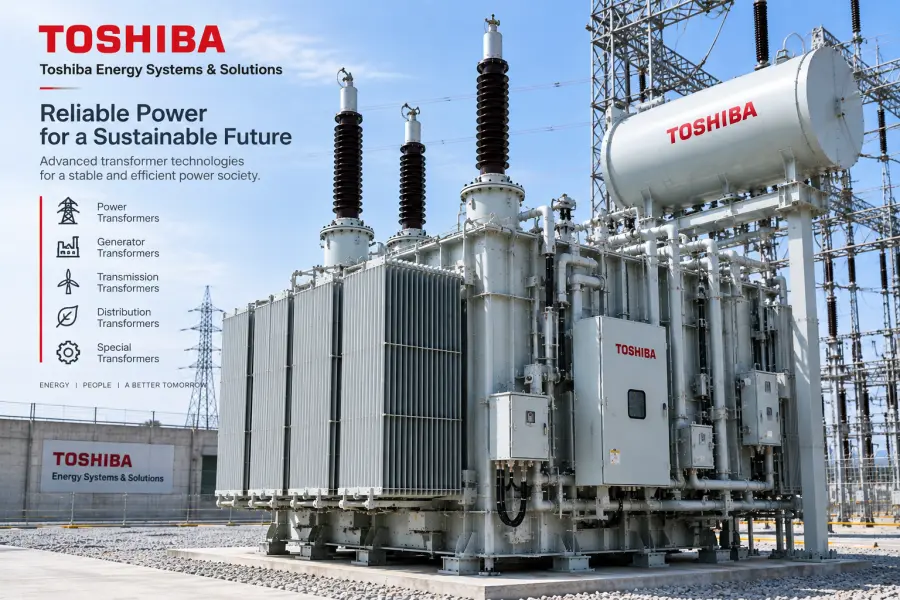

Toshiba Corporation is a Japanese technology and electrical equipment company with a history dating back to 1875. Toshiba manufactured Japan’s first transformer in 1894 and has since developed extensive experience in power generation, transmission, distribution, and grid infrastructure.
Today, Toshiba’s transformer technologies support utility networks, power generation facilities, substations, renewable energy projects, and industrial electrical systems.
Main Transformer Products
Power Transformers: Large power transformers for utility transmission networks, substations, and power generation facilities.
Generator Transformers: Transformers designed to connect generator output to electrical transmission systems.
Autotransformers: Solutions for interconnecting different voltage levels in power networks.
Separate Winding Transformers: Transformers for applications requiring electrically separate windings.
Distribution Transformers: Oil-immersed distribution transformers for utility, commercial, and industrial applications.
Pole-Mounted Transformers: Distribution solutions for overhead electricity networks.
Pad-Mounted Transformers: Compact transformer solutions for suitable underground distribution networks.
Solar Inverter-Duty Transformers: Transformers for solar power systems and renewable energy grid connections.
Traction Transformers: Specialized transformers for railway and traction power applications.
Reading More:Pad Mounted Transformer
Representative Technical Capabilities
Toshiba offers transformer solutions for high-voltage transmission as well as distribution and industrial applications. Its official power transformer product page states capabilities of up to 1,200 kV and 1,500 MVA for its power transformer portfolio. Actual ratings depend on the product series, design, manufacturing facility, and project requirements.
For distribution transformers, available ratings and configurations vary by product category and regional manufacturing operation.
| Technical Item | Typical Focus |
|---|---|
| Transformer Type | Power, Generator, Autotransformer, Distribution, Traction, Special-Purpose |
| Maximum Power Transformer Rating | Up to 1,500 MVA, according to Toshiba’s published product information |
| Maximum Voltage Rating | Up to 1,200 kV, according to Toshiba’s published product information |
| Distribution Transformer Types | Oil-Immersed, Pole-Mounted, Pad-Mounted, Solar Inverter-Duty |
| Frequency | 50 Hz / 60 Hz, depending on the product and application |
| Cooling Method | Product- and project-specific |
| Design | Customized according to grid and project requirements |
| Standards | Applicable IEC, IEEE, or regional standards, depending on the product |
| Applications | Power Generation, Transmission, Substations, Distribution, Industry, Renewable Energy, Railways |
Key Strengths
High-Voltage Engineering: Experience in high-voltage power transformers and transmission infrastructure.
Transformer Reliability: Engineering and testing designed to support demanding utility and industrial operating conditions.
Broad Product Portfolio: Power, generator, distribution, autotransformer, and specialized transformer solutions.
Grid Integration: Transformer technologies for utility networks, renewable energy connections, and major electrical infrastructure.
Distribution Solutions: Options including pole-mounted, pad-mounted, and solar inverter-duty transformers, depending on the regional product portfolio.
Typical Applications
Utility transmission and high-voltage substations
Power generation and generator step-up systems
Industrial plants and major electrical infrastructure
Overhead and underground distribution networks
Solar power and renewable energy projects
Railway and traction power systems
Toshiba — Transformer Manufacturer Overview
| Parameter | Details |
|---|---|
| Company | Toshiba Corporation and relevant Toshiba group businesses |
| Country | Japan |
| Transformer History | First Toshiba transformer manufactured in 1894 |
| Main Products | Power, Generator, Distribution, Autotransformer, Traction Transformers |
| Published Power Transformer Capability | Up to 1,500 MVA |
| Published Voltage Capability | Up to 1,200 kV |
| Distribution Options | Pole-Mounted, Pad-Mounted, Solar Inverter-Duty |
| Main Markets | Utilities, Power Generation, Industry, Renewable Energy, Railways |
| Official Website | https://www.global.toshiba/ww/products-solutions/energy.html |
7. TBEA
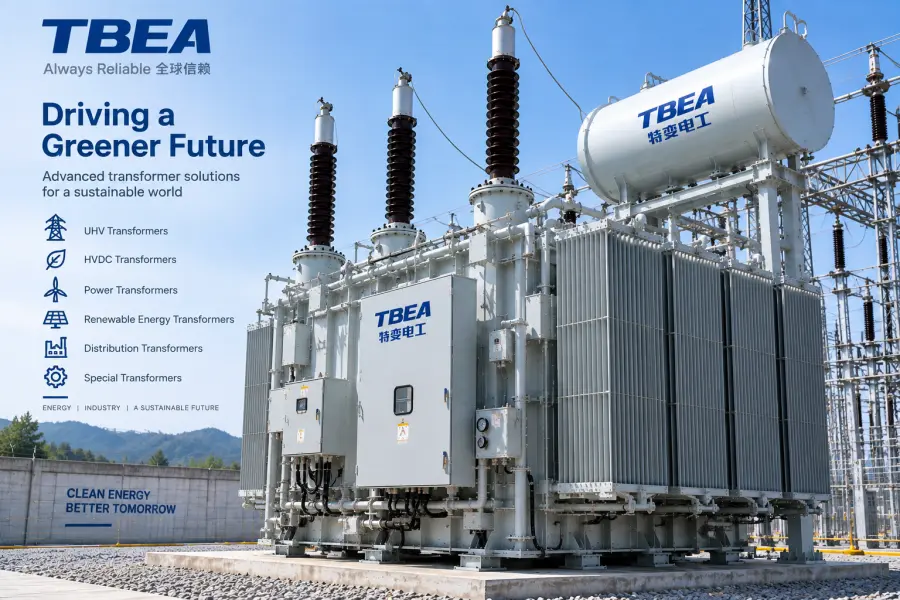

TBEA Co., Ltd., formerly known as Tebian Electric Apparatus, is one of China’s leading manufacturers of power transformers and power transmission and distribution equipment. According to company-related historical accounts, its transformer industry roots date back to 1938, when China developed its first power transformer. Today, TBEA operates an extensive manufacturing network, reported to include 18 domestic industrial parks and three overseas manufacturing facilities. The company has played an important role in China’s ultra-high-voltage (UHV) transmission development and expanded its business into international power grid, power generation, and renewable energy projects. Its transformer solutions serve utility networks, power plants, substations, and large-scale industrial infrastructure worldwide.
Main Transformer Products
- 1,000 kV UHV transformers
- HVDC converter transformers
- Large power transformers
- Generator step-up transformers
- Autotransformers
- Distribution transformers
- Renewable energy transformers
Representative Technical Capabilities
TBEA’s official product portfolio includes a 1,000 kV single-phase autotransformer rated 1,000,000 kVA, designed for UHV AC transmission. Its published voltage ratio is approximately 1,050/√3 kV to 525/√3 kV with a 110 kV tertiary.
Its product catalog also lists a 1,500,000 kVA / 1,000 kV field-assembled single-phase autotransformer, alongside 750 kV, 500 kV, 330 kV and 220 kV transformer families.
| Technical Item | Representative Capability |
|---|---|
| Highest Published AC Class | 1,000 kV UHV |
| Published UHV Rating | Up to 1,500 MVA in listed field-assembled product |
| UHV Example | 1,000 MVA / 1,000 kV autotransformer |
| Frequency Example | 50 Hz |
| Transformer Types | UHV, HVDC, power, GSU, autotransformer |
| Applications | UHV transmission, generation, utility grid, renewable energy |
Key Strengths
TBEA’s strongest differentiator is its experience with China’s large UHV transmission network and very-high-capacity transformer manufacturing.
Typical Applications
UHV AC transmission, HVDC systems, large utility substations, power generation, renewable energy and international EPC projects.
8. China XD Electric
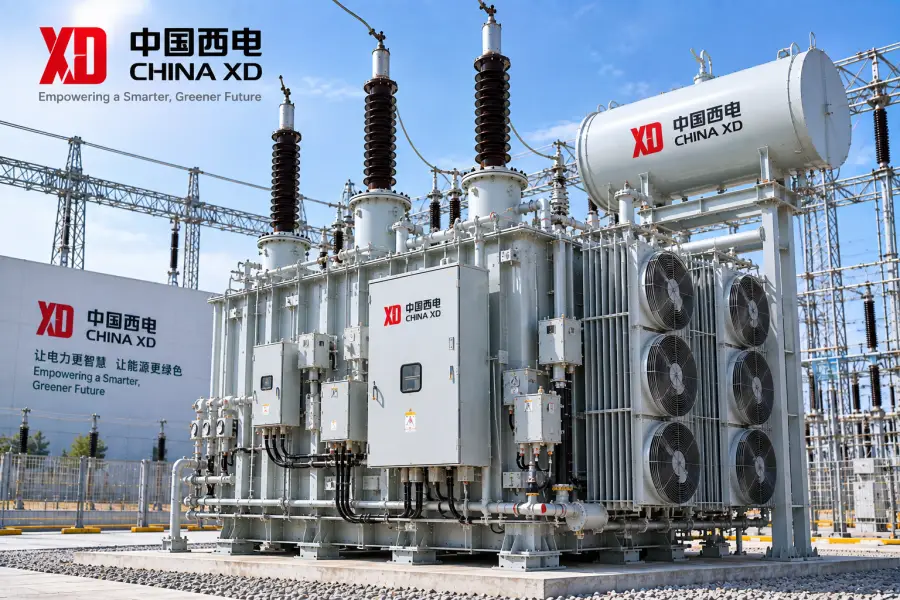

China XD Electric Group is one of China’s major manufacturers of power transmission and distribution equipment. Established in 1992, the company specializes in the design, manufacturing, and supply of transformers, circuit breakers, switchgear, and other electrical equipment for power grid infrastructure. With extensive experience in extra-high-voltage (EHV) and ultra-high-voltage (UHV) technologies, China XD Electric supports power transmission, generation, and smart grid development in domestic and international markets.
Main Transformer Products
UHV and EHV Power Transformers: Designed for high-voltage transmission networks and large-scale substations.
Generator Step-Up Transformers: Used to connect power generation units to high-voltage transmission systems.
Autotransformers: For interconnecting different voltage levels in power networks.
Converter Transformers: Designed for high-voltage direct-current (HVDC) transmission and converter stations.
Distribution and Special-Purpose Transformers: For industrial, commercial, railway, wind power, and other specialized applications.
Shunt Reactors: Supporting voltage regulation and reactive power compensation in high-voltage networks.
Technical Capabilities and Innovation
China XD Electric has developed large-capacity transformers for major power-generation and transmission projects. Official company information documents a 1,210 MVA / 500 kV three-phase power transformer developed for a 1,000 MW power-generation unit. The company also reports capabilities related to 1,000 kV AC transformer applications and ±1,100 kV DC converter-transformer systems through its transformer subsidiaries.
The company focuses on improving transformer efficiency, reducing energy losses, and enhancing operational reliability. Its technology development also includes smart monitoring and condition-monitoring solutions designed to support equipment management and predictive maintenance, depending on the product and system configuration.
Global Reach and Manufacturing
China XD Electric operates through subsidiaries and manufacturing facilities serving power infrastructure projects in domestic and international markets. Its broader electrical equipment portfolio supports transmission and distribution networks, substations, power plants, and major grid projects. Product supply and after-sales services, including technical support and maintenance, depend on the specific project and local service arrangements.
Sustainability and Energy Efficiency
China XD Electric emphasizes energy-efficient equipment and improvements in environmental performance. Its transformer and power grid solutions are developed to support reliable electricity transmission, reduce power losses, and meet applicable technical and environmental requirements. Specific insulation materials, monitoring functions, and environmental features vary by product series and project specifications.
Typical Applications
Ultra-high-voltage and extra-high-voltage transmission networks
Large power plants and generator connections
Utility substations and national grid infrastructure
HVDC converter stations
Railway, wind power, and industrial electrical systems
Smart grid and power transmission projects
China XD Electric — Transformer Manufacturer Overview
| Parameter | Details |
|---|---|
| Company | China XD Electric Group |
| Country | China |
| Established | 1992 |
| Main Products | UHV/EHV Power Transformers, Generator Step-Up Transformers, Autotransformers, Converter Transformers, Distribution Transformers |
| Related Equipment | Shunt Reactors, Circuit Breakers, Switchgear, Substation Equipment |
| Representative Published Transformer Rating | 1,210 MVA / 500 kV |
| AC UHV Capability | 1,000 kV applications |
| DC UHV Capability | ±1,100 kV converter-transformer applications |
| Technical Focus | High-Voltage Transmission, Grid Integration, Energy Efficiency |
| Main Applications | Power Generation, Transmission, Utility Substations, HVDC Converter Stations, Industrial Infrastructure |
| Official Website | https://www.xd.com.cn/ |
9. Schneider Electric
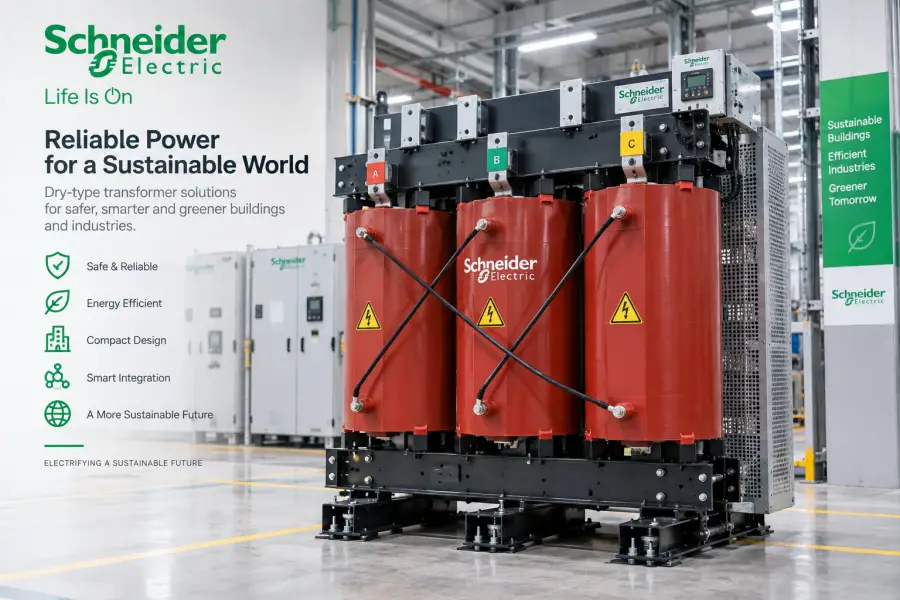

Schneider Electric SE is a global leader in energy management and industrial automation, with a history dating back to 1836, when the Schneider brothers took over the Le Creusot foundries in France. Over the following decades, the company expanded from heavy industry into electrical equipment, power distribution, and automation. Today, Schneider Electric provides integrated electrical solutions for buildings, industrial facilities, data centers, and critical infrastructure worldwide.
Unlike manufacturers that primarily focus on ultra-high-voltage transmission transformers, Schneider Electric is particularly well known for dry-type transformers, distribution solutions, and integrated medium- and low-voltage electrical systems. Its products support reliable power distribution, energy efficiency, and electrical system integration across a wide range of applications.
Main Transformer Products
Cast-Resin Dry-Type Transformers: Designed for indoor installations and applications requiring enhanced fire safety and reliable operation.
Distribution Transformers: For commercial buildings, industrial facilities, and electrical distribution networks.
Industrial Transformer Solutions: Including transformers for specialized industrial power requirements.
Drive Isolation Transformers: Used in motor drive systems to provide electrical isolation.
Buck-Boost Transformers: Designed for applications requiring small voltage adjustments.
Building Power Distribution Transformers: Integrated into building electrical systems and modern power distribution infrastructure.
Technical Capabilities and Key Strengths
Schneider Electric’s Trihal cast-resin dry-type transformer range is specified for ratings of up to 15 MVA and voltages up to 36 kV. Actual ratings depend on the product configuration and application.
The company’s major advantage is its ability to integrate transformer solutions with medium-voltage switchgear, low-voltage distribution, protection, monitoring, automation, and energy management systems. This integrated approach makes Schneider Electric particularly relevant to modern buildings, industrial facilities, and data center infrastructure.
Sustainability and Energy Efficiency
Schneider Electric emphasizes energy-efficient electrical equipment and solutions that support more sustainable power distribution. Its dry-type transformer offerings can be suitable for indoor installations where fire safety, installation conditions, and environmental considerations are important. Specific features depend on the selected product series.
Typical Applications
Data centers and critical power infrastructure
Commercial buildings, hospitals, and public facilities
Industrial plants and manufacturing facilities
Indoor substations and medium-voltage distribution systems
Motor drive systems and specialized industrial applications
Integrated building and energy management systems
Schneider Electric — Transformer Manufacturer Overview
| Parameter | Details |
|---|---|
| Company | Schneider Electric SE |
| Country of Origin | France |
| Historical Roots | 1836, Le Creusot, France |
| Main Business Areas | Energy Management, Industrial Automation, Electrical Distribution |
| Main Transformer Products | Dry-Type, Cast-Resin, Distribution, and Industrial Transformer Solutions |
| Representative Transformer Range | Trihal Cast-Resin Dry-Type Transformers |
| Published Trihal Rating | Up to 15 MVA |
| Published Trihal Voltage | Up to 36 kV |
| Core Strength | Integrated Electrical Distribution and Energy Management |
| System Integration | Medium-Voltage Switchgear, Low-Voltage Distribution, Protection, Monitoring, Automation |
| Main Applications | Data Centers, Buildings, Industry, Hospitals, Infrastructure |
| Official Website | https://www.se.com/ |
10. ABB
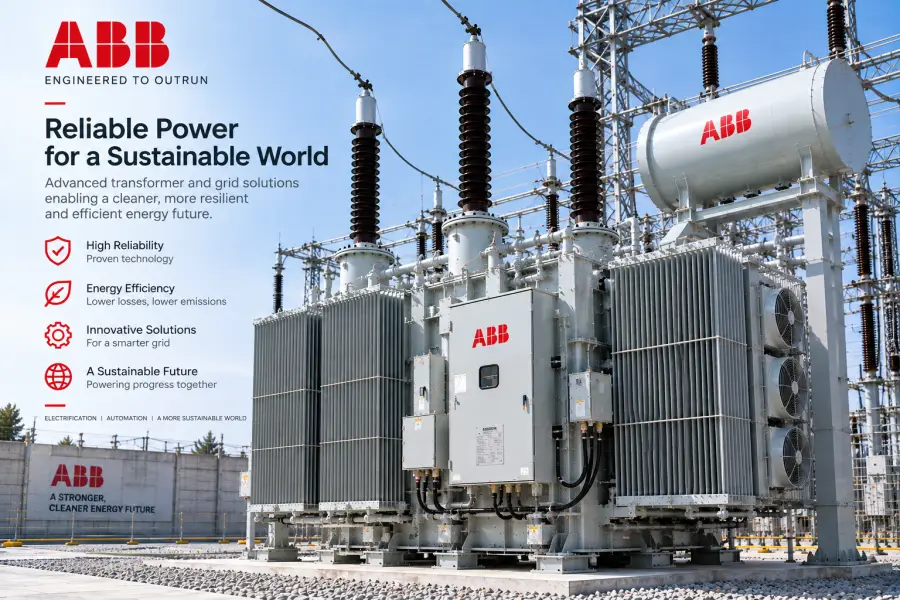

ABB is a globally recognized electrical engineering company with a history dating back to 1883, when ASEA, one of its predecessor companies, was founded in Sweden. ABB was formed in 1988 through the merger of ASEA and Switzerland’s Brown, Boveri & Cie (BBC), combining extensive expertise in electrical equipment, power transmission, and industrial technology.
ABB has played an important historical role in transformer development and high-voltage grid technology. Its former Power Grids business included major transformer operations and high-voltage products. ABB completed the divestment of 80.1% of this business to Hitachi in 2020, and the business subsequently became part of Hitachi Energy. Many large power transformer technologies historically associated with ABB are therefore now part of Hitachi Energy’s portfolio.
Main Transformer Products
ABB’s historical transformer portfolio included a wide range of products for power transmission, distribution, and specialized applications:
Power Transformers: For power plants, transmission networks, and utility substations, including large-capacity and high-voltage applications.
Distribution Transformers: For industrial, commercial, and residential electricity distribution.
Dry-Type Transformers: For indoor installations and applications with specific fire-safety requirements.
HVDC Converter Transformers: For high-voltage direct-current transmission systems.
Traction Transformers: For railway, metro, and electric transportation systems.
Special-Purpose Transformers: Including industrial and other specialized power applications.
Technical Capabilities and Representative Parameters
ABB and its predecessor companies made significant contributions to large-capacity transformer engineering and ultra-high-voltage transmission technology.
Historical company records identify a 1,300 MVA transformer manufactured by Brown, Boveri & Cie (BBC) in 1970 as a landmark in large-capacity transformer development. In more recent technology milestones, ABB announced a 1,200 kV AC power transformer developed and manufactured for India’s Bina National Test Station. ABB also announced the successful type testing of converter transformers designed for China’s ±1,100 kV UHVDC transmission system.
These figures represent different historical achievements and technical categories; they should not be interpreted as the ratings of one transformer model or as the maximum ratings of ABB’s current product portfolio.
| Technical Item | Representative Capability or Historical Record |
|---|---|
| Historical Large-Capacity Transformer | 1,300 MVA, manufactured by BBC in 1970 |
| Ultra-High-Voltage AC Transformer | 1,200 kV |
| UHVDC Converter Transformer Technology | ±1,100 kV DC transmission system |
| Large Power Transformers | Designed for high-voltage transmission and utility substations |
| Distribution Transformers | Voltage and capacity selected for local distribution networks |
| Dry-Type Transformers | Used in indoor and selected industrial applications |
| Traction Transformers | Designed for railway power supply and demanding load cycles |
Actual transformer ratings, insulation systems, cooling methods, and operating conditions depend on the specific product design and project requirements.
ABB and Hitachi Energy: Understanding the Transition
In 2020, ABB completed the divestment of 80.1% of its Power Grids business to Hitachi. The business subsequently became Hitachi Energy, which is the relevant company to consult when researching many of the large power transformers and grid technologies formerly associated with ABB.
For buyers, this distinction is important when comparing historical ABB transformer references with currently available products. Historical ABB specifications and achievements should not automatically be treated as specifications for products currently sold under the ABB brand.
Reading More:What is a power plant transformer
Typical Applications
High-voltage transmission networks and utility substations
Large power plants and generator connections
UHVDC transmission and converter stations
Electricity distribution networks
Railway and traction power systems
Industrial power infrastructure and grid integration
ABB — Transformer Manufacturer Overview
| Parameter | Details |
|---|---|
| Company | ABB Ltd |
| Country of Origin | Switzerland and Sweden |
| Historical Roots | ASEA founded in 1883; ABB formed in 1988 |
| Historical Transformer Portfolio | Power, Distribution, Dry-Type, HVDC, Traction, Special Transformers |
| Historical Large-Capacity Record | 1,300 MVA, manufactured by BBC in 1970 |
| Published UHV AC Transformer Achievement | 1,200 kV |
| Published UHVDC Technology | ±1,100 kV transmission system |
| Former Power Grids Business | Transferred to Hitachi in 2020 |
| Successor for Former Power Grids Transformer Business | Hitachi Energy |
| ABB’s Current Focus | Electrification, Automation, Motion, and Robotics & Discrete Automation |
| Main Relevance to Transformer Industry | Historical Engineering, Technology Legacy, and Installed Base |
| Official Website | https://global.abb/ |
Get it now: The Complete Guide to High Voltage Transformers
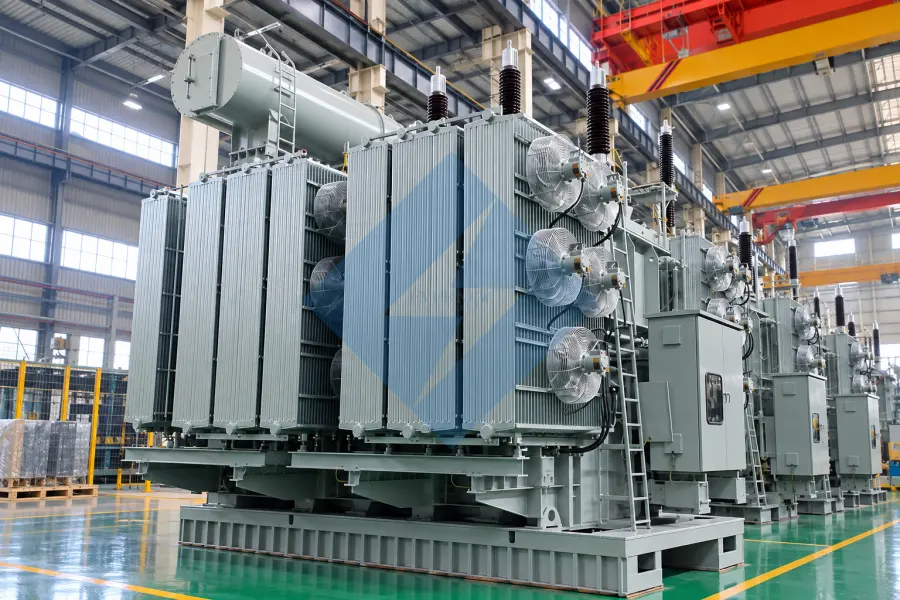
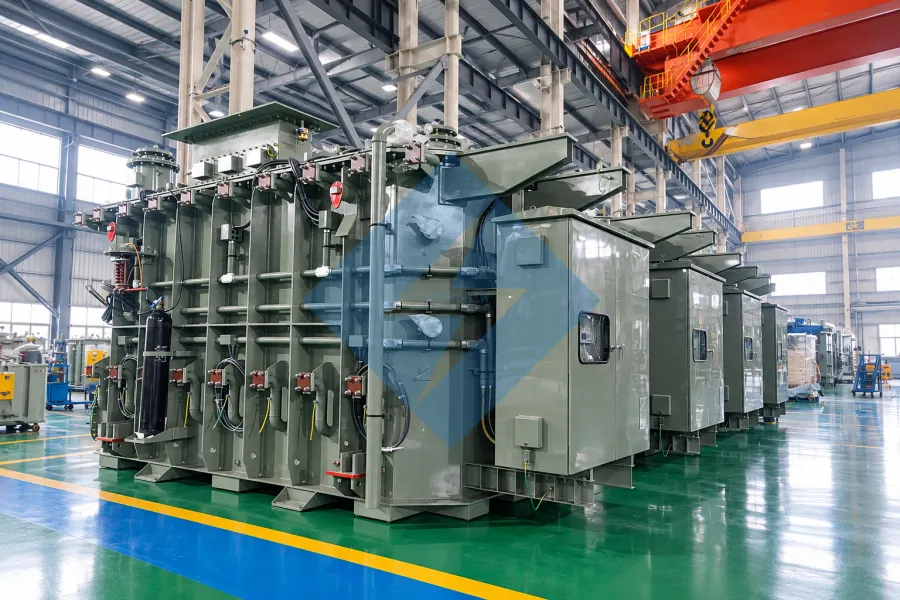
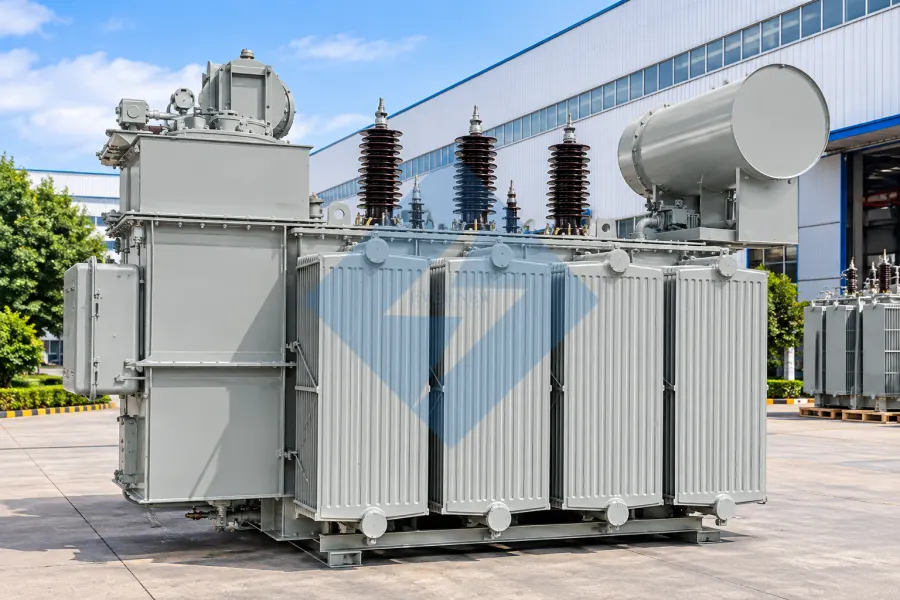
How Do the World’s Leading Transformer Manufacturers Differ?
The world’s leading transformer manufacturers differ in their engineering capabilities, product ranges, voltage ratings, and target markets. A 1,000 kV ultra-high-voltage (UHV) transformer, a 15 MVA / 36 kV cast-resin transformer, and a medium-voltage pad-mounted transformer require different manufacturing expertise and testing capabilities.
1. Large Power Transformers and UHV Systems
Hitachi Energy, Siemens Energy, GE Vernova, Mitsubishi Electric, HD Hyundai Electric, Toshiba, TBEA, and China XD Electric serve large-scale power generation and transmission projects. Their product portfolios may include large power transformers, generator step-up transformers, autotransformers, converter transformers, and other equipment for high-voltage transmission networks.
TBEA and China XD Electric have experience in ultra-high-voltage AC transformer applications, while major manufacturers also participate in high-voltage direct-current (HVDC) transmission projects. These applications require specialized insulation systems, thermal design, mechanical strength, and extensive testing.
2. Distribution and Dry-Type Transformers
Distribution transformers support utilities, commercial buildings, industrial facilities, and renewable energy projects. Common types include oil-immersed, pad-mounted, pole-mounted, dry-type, and compact substation transformers.
Dry-type transformers are particularly suitable for many indoor applications, including data centers, hospitals, factories, and commercial buildings. For example, Schneider Electric’s Trihal cast-resin range reaches 15 MVA / 36 kV, while Hitachi Energy’s HiDry72 range reaches 63 MVA / 72.5 kV. Actual availability depends on the product configuration and market.
3. How to Choose a Transformer Manufacturer
Before selecting a supplier, buyers should compare the following factors:
Technical specifications: Rated capacity, primary and secondary voltage, frequency, vector group, impedance, tap range, and cooling method.
Standards and compliance: IEC 60076, IEEE C57, CSA, EN, and applicable local requirements.
Quality and testing: Factory acceptance testing (FAT), insulation tests, losses, temperature-rise tests, and other project-specific requirements.
Engineering capabilities: Customized designs, accessories, protection systems, monitoring, and enclosure configurations.
Commercial terms: Lead time, warranty, delivery terms, project references, and after-sales support.
The largest manufacturer is not necessarily the best choice for every project. The right supplier is one whose engineering capabilities, product range, compliance, quality control, and delivery arrangements match the project’s requirements.
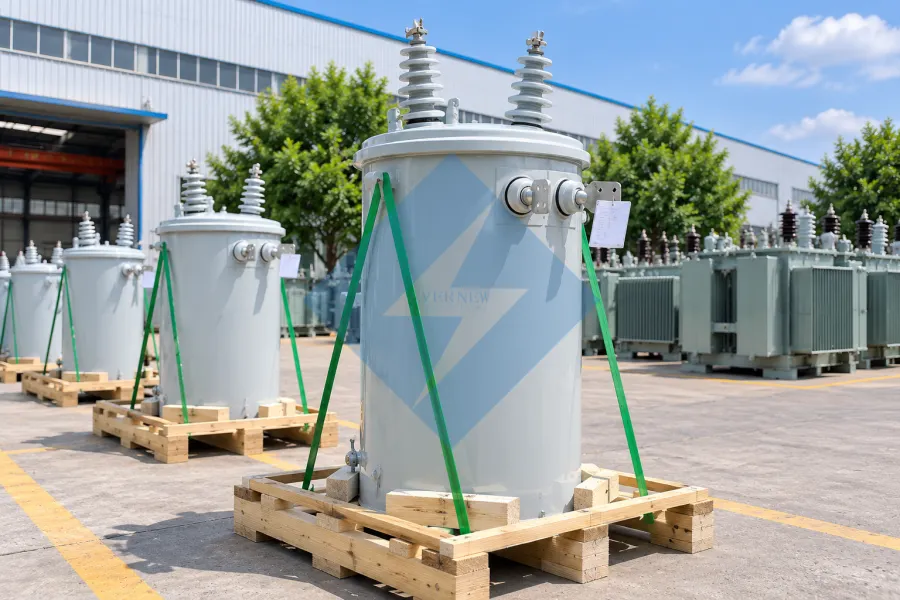
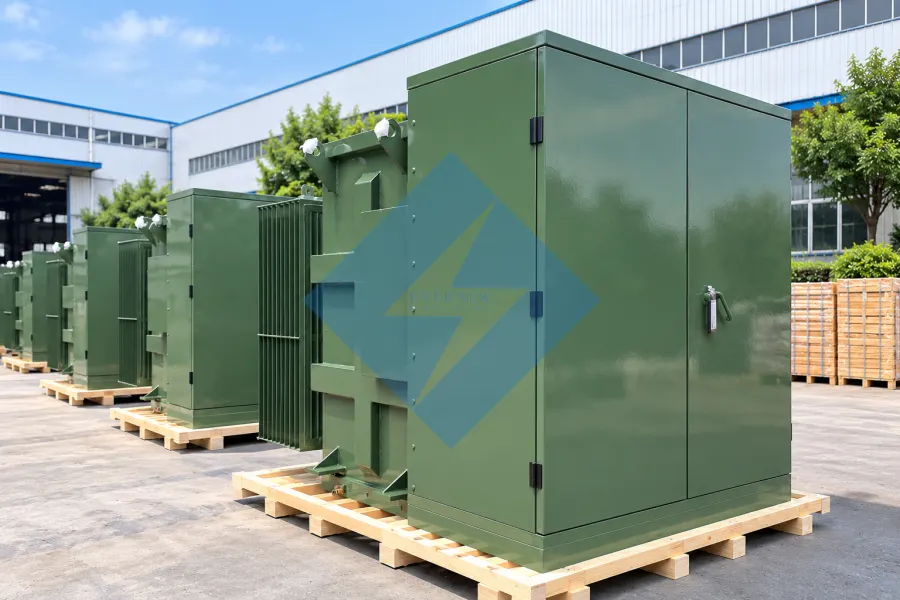
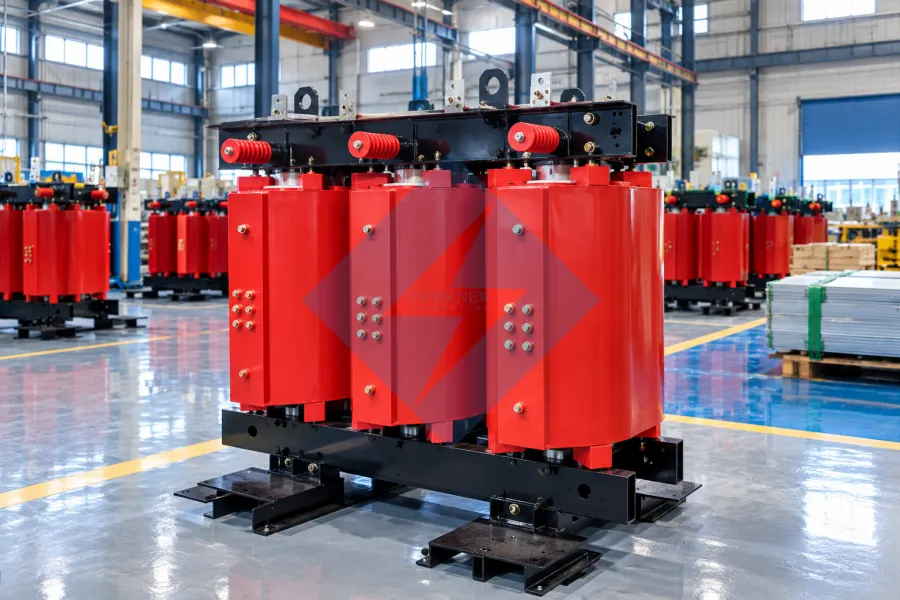
Evernew Transformer — A Transformer Manufacturer and Supplier from China
Evernew Transformer provides customized transformer solutions for international buyers, electrical distributors, EPC contractors, renewable energy developers, and industrial customers. Its product range covers power transformers, distribution transformers, pad-mounted transformers, pole-mounted transformers, dry-type transformers, and special-purpose transformers.
With manufacturing facilities covering more than 500 acres across two major production bases, Evernew focuses on manufacturing efficiency, quality control, and supply chain coordination. In-house production of selected components, including enameled wire and insulating materials, supports production management and cost control.
Global Reach, Quality, and Certifications
Evernew transformers have been exported to more than 50 countries, serving customers in power distribution, industrial infrastructure, renewable energy, and other applications.
Products can be designed to meet applicable international standards, including IEC 60076 and IEEE C57. Relevant certification and compliance options may include CE, UL, cUL, and GOST, depending on the product and model. Buyers should confirm the applicable certification for their specific requirements.
Transformer Products and Manufacturing Capabilities
Evernew offers transformer solutions for a range of power distribution and transmission applications.
| Technical Parameter | Manufacturing Scope |
|---|---|
| Capacity Range | 15 kVA–500 MVA |
| Voltage Range | 6 kV–500 kV |
| Frequency | 50 Hz / 60 Hz |
| Phase | Single-phase / Three-phase |
| Winding Material | Copper / Aluminum |
| Cooling Methods | ONAN / ONAF / AN / AF, depending on design |
| Applicable Standards | IEC 60076 / IEEE C57 and other project-specific requirements |
| Customization | Voltage ratio, impedance, tap range, cooling, accessories, and enclosure configuration |
The broader manufacturing scope covers different transformer categories. Final ratings, configurations, certifications, and efficiency compliance depend on the product type and project specifications.
Main Product Categories
Power Transformers: For power plants, transmission networks, and utility substations.
Distribution Transformers: Oil-immersed transformers for utility, commercial, and industrial networks.
Pad-Mounted Transformers: For underground distribution systems and compact power installations.
Pole-Mounted Transformers: For overhead distribution networks.
Dry-Type Transformers: For data centers, factories, commercial buildings, and indoor substations.
Special-Purpose Transformers: Including isolation, autotransformer, rectifier, mining, renewable energy, and battery energy storage system (BESS) applications.
Efficient Production and Competitive Pricing
Evernew coordinates engineering, component sourcing, manufacturing, and testing to support competitive pricing and project delivery requirements.
For selected projects, expedited production schedules may be possible. For example, a 220 kV transformer may have a target delivery schedule of approximately 90 days, subject to approved drawings, technical specifications, material availability, manufacturing arrangements, and required testing.
Energy efficiency is considered during transformer design. Compliance with specific requirements, including U.S. Department of Energy (DOE) efficiency standards, should be confirmed for the relevant product and destination market.
Visit Evernew Transformer Factory
Evernew welcomes qualified customers and project partners to learn more about its manufacturing facilities, engineering capabilities, and quality-control processes.
For a customized quotation, buyers are encouraged to provide a technical datasheet, single-line diagram (SLD), bill of quantities (BOQ), or existing transformer nameplate information. Key details include rated capacity, primary and secondary voltage, frequency, vector group, impedance, cooling method, applicable standards, quantity, and delivery destination.
Request a Transformer Quotation
If you are sourcing a power transformer, distribution transformer, dry-type transformer, or customized transformer solution, contact Evernew Transformer to discuss your technical and commercial requirements.
Website: https://evernewtransformer.com/
Company Profile: https://evernewtransformer.com/about/
Email: info@evernewtransformer.com
220 kV Transformer: https://evernewtransformer.com/manufacturer/220-kv-230kv-high-voltage-special-oil-immersed-power-transformer/
Evernew aims to provide practical transformer solutions through customized engineering, manufacturing coordination, and project-specific technical support.
