

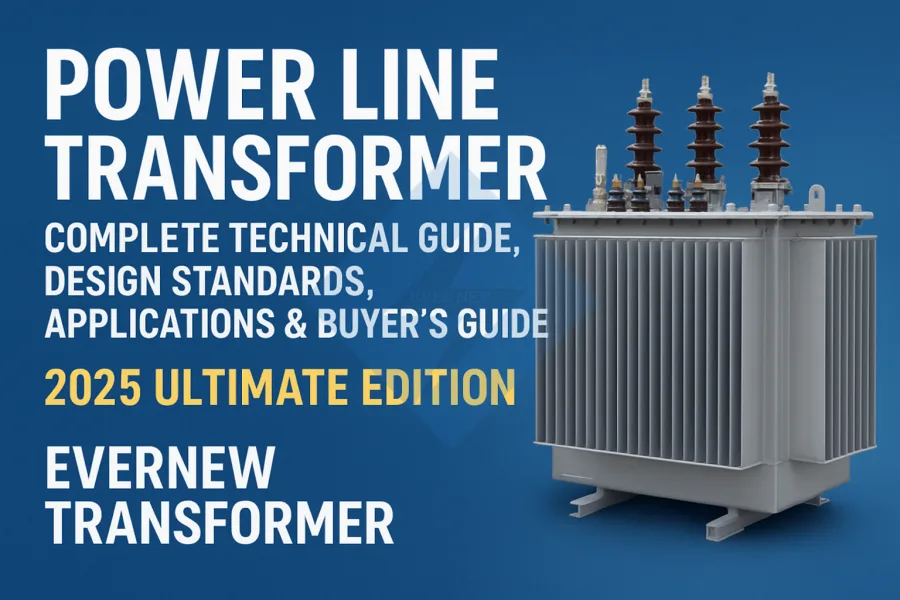
Ultimate Edition — Engineered by Evernew Transformer (6–500 kV Global Manufacturer)
1. Introduction: Why Power Line Transformers Are More Critical Than Ever
Power line transformers are the essential building blocks of every modern power network. From large utility substations to manufacturing zones, commercial buildings, residential neighborhoods, transportation systems, and renewable energy plants—every part of the electrical grid relies on transformers to regulate voltage, maintain stability, and ensure safe power delivery.
As global demand continues to rise—driven by data centers, EV charging infrastructure, automation, and clean energy projects—customers are demanding higher efficiency, greater reliability, and longer lifecycle performance.
2025 Global Requirement Shift:
Regulations such as DOE 2016/2022 (USA) and EU Ecodesign Tier 2 are pushing transformer manufacturers towards lower losses, improved materials, and better thermal performance. Choosing a compliant transformer has become essential for reducing operating costs and achieving sustainability targets.
Evernew Transformer, one of China’s leading transformer manufacturers (6–500 kV), serves customers in the USA, Canada, Europe, Australia, Africa, and Asia, offering premium power line transformers that meet IEC, IEEE/ANSI, and country-specific standards.
2. What Is a Power Line Transformer?
A power line transformer is an electrical apparatus that transfers energy between circuits using electromagnetic induction, stepping voltage up or down depending on the required grid level.
2.1 Working Principle — Faraday’s Law
A transformer works by magnetic induction:

-
Primary Winding: Receives input voltage
-
Secondary Winding: Outputs transformed voltage
-
Core: Transfers magnetic flux with minimal losses
-
Insulation System: Guarantees durability and safety
-
Cooling Mechanism: Maintains temperature under load
3. Common Voltage Levels
Evernew supplies power line transformers across all major voltage classes:
| Classification | Voltage Level | Typical Evernew Range |
|---|---|---|
| Medium Voltage (MV) | 6–35 kV | 6, 10, 11, 20, 22, 33 kV |
| High Voltage (HV) | 66–150 kV | 66, 110, 132 kV |
| Extra High Voltage (EHV) | 220 kV+ | 220 kV, 500 kV |
4. Types of Power Line Transformers
Transformers differ by installation, construction, and insulation method.
4.1 Distribution Transformers
| Type | Installation | Capacity | Application |
|---|---|---|---|
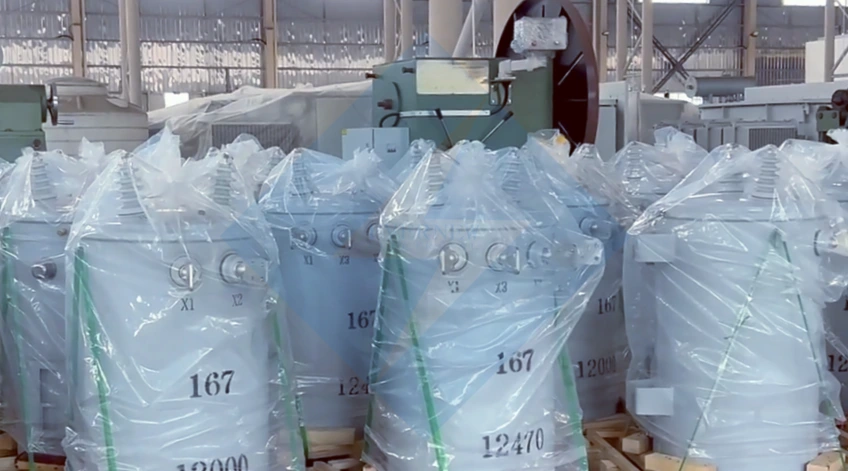
| Pole-Mounted | Overhead utility poles | 10–500 kVA | Rural grids, villages, overhead networks |
| Pad-Mounted | Ground level, lockable enclosure | 25–5000 kVA | Industrial parks, commercial zones, residential communities |
4.2 Substation / Power Transformers
-
Capacity: 1–500 MVA
-
Applications: Utility substations, industrial complexes, renewable energy plants
-
Built for high reliability, system stability, and grid interconnection.
4.3 Cooling System Options
| Type | Medium | Advantage | Typical Use |
|---|---|---|---|
| Oil-Immersed | Mineral/Vegetable Oil | High efficiency, large capacity | Utilities, substations |
| Dry-Type | Cast Resin / Air | Fire-safe, indoor-safe, low maintenance | Hospitals, data centers, tunnels |
5. Key Components and Engineering Design
5.1 Core System
-
Cold-rolled grain-oriented steel (CRGO)
-
Step-lap design reduces noise & no-load loss
-
Amorphous metal optional for high-efficiency applications
5.2 Windings
-
Copper (preferred): High conductivity, high short-circuit strength
-
Aluminum (optional): Cost-effective
5.3 Insulation System
-
Oil-type: Kraft paper, Nomex, pressboard
-
Dry-type: Epoxy resin, fiberglass
-
Thermal classes: A (105°C), F (155°C), H (180°C)
5.4 Protection Devices
-
Oil-level indicator
-
Winding/oil temperature sensors
-
Pressure relief valve
-
Buchholz relay (for 33 kV and above)
6. Technical Specification Parameters (What Defines a Transformer)
6.1 Electrical Characteristics
-
Rated Capacity (kVA/MVA)
-
Primary/Secondary Voltage
-
Vector Group (Dyn11, Yyn0, etc.)
-
Impedance (%)
-
Frequency (50 / 60 Hz)
6.2 Environmental / Mechanical Designs
-
Cooling Method: ONAN, ONAF, KNAN, KNAF
-
Protection Level: IP23 / IP44 / IP54
-
Installation Environment: Indoor / Outdoor
-
Altitude & Ambient Temperature
7. Compliance & Global Standards
Evernew designs transformers to match project requirements in different regions:
| Standard | Countries | Description |
|---|---|---|
| IEC 60076 | Europe, Asia, Africa | International transformer standard |
| IEEE/ANSI C57 | USA, Canada | North American efficiency, dielectric, design requirements |
| AS/NZS 2374 | Australia, New Zealand | Grid and safety requirements |
8. Applications Across Industries
Utilities
-
Distribution networks
-
Rural electrification
-
Substation step-down/step-up transformers
Renewable Energy
-
Wind farm substations
-
ESS / BESS transformer integration
Industrial
-
Mining
-
Manufacturing
-
Steel plants
-
Data centers
Infrastructure
-
Airports
-
Rail networks
-
Metro tunnels
-
Seaport power distribution
9. Cost Guide — What Determines Transformer Price
Transformer pricing depends on voltage class, efficiency level, and raw material market.
| Capacity | Type | Typical Price (USD) |
|---|---|---|
| 50–200 kVA | Pole-Mounted | $500 – $4,000 |
| 200–2000 kVA | Pad-Mounted | $3,500 – $20,000 |
| 2–10 MVA | Substation | $25,000 – $150,000 |
| 20–100 MVA | High Voltage Power | $200,000 – $1M+ |
10. Why Choose Evernew Transformer (China)
10.1 Engineering Strength
-
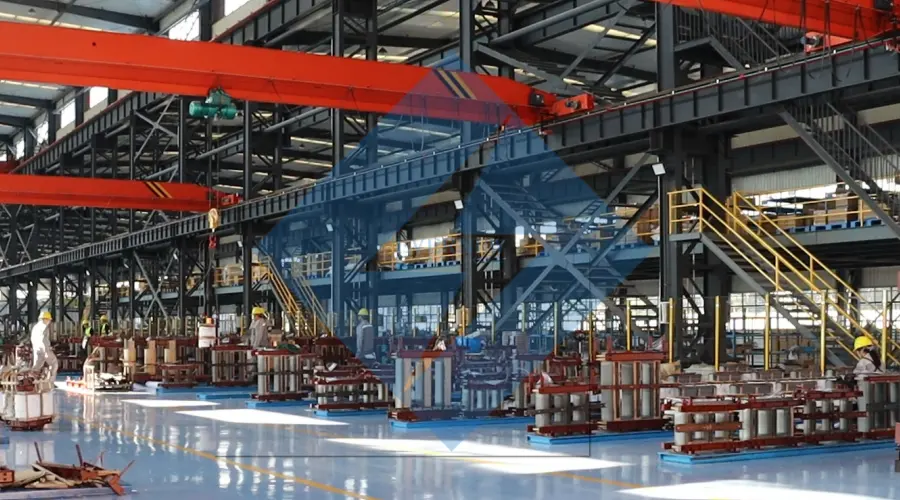
500-acre manufacturing base
-
Automated core cutting & vacuum oil processing lines
-
300+ engineers
-
HV test laboratory (up to 500 kV)
10.2 Global Certifications
-
IEC, ISO, CE
-
IEEE/ANSI compatible
-
UL/CSA design on request
10.3 Custom Solutions
-
Special voltage levels
-
Marine-grade transformers
-
High-altitude transformers
-
High-efficiency amorphous designs
-
Customized vector groups
10.4 Fast Delivery
-
Standard production: 15–45 days
-
Large MVA transformers: 60–120 days
11. Buyer’s Checklist — Information Needed for a Complete Quotation
To ensure accurate pricing and engineering design, please provide:
| Required | Details |
|---|---|
| ✔ Rated Capacity (kVA/MVA) | Essential |
| ✔ Primary/Secondary Voltage | Essential |
| ✔ Vector Group | Essential |
| ✔ Frequency (50/60 Hz) | Essential |
| ✔ Impedance (%) | Essential |
| ✔ Installation Type (Pole / Pad / Indoor) | Essential |
| ✔ Cooling Method | Essential |
| ✔ Standard (IEC / IEEE) | Essential |
| ✔ Winding Material (Copper/Aluminum) | Optional |
| ✔ Site Conditions: Altitude & Ambient Temperature | Optional |
Providing a Single-Line Diagram (SLD) helps optimize transformer design.
Learn More:How to Choose the Right 25 kVA–500 kVA Distribution Transformer
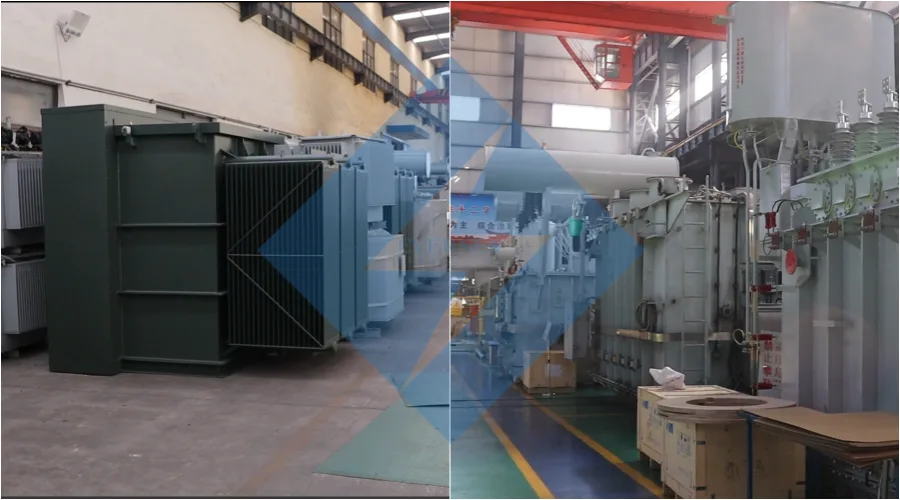
12. FAQ — Common Questions from Global Customers
Q1: What is the typical lifespan?
20–35 years with proper maintenance.
Q2: Can Evernew support renewable energy projects?
Yes, we supply grid-step-up and pad-mounted transformers for solar, wind, and ESS.
Q3: Do you provide test reports?
Yes:
-
Routine Test Report
-
FAT (Factory Acceptance Test)
-
Type Test Report (on request)
13. Conclusion
Power line transformers are vital long-term assets. Choosing a reliable transformer impacts grid stability, safety, operational cost, and energy efficiency.
Evernew Transformer delivers advanced, efficient, and globally certified transformers built to meet the evolving needs of modern electrical infrastructure.
👉 Ready for a Quote?
Send us your detailed technical specifications, and our engineering team will reply within 12 hours with complete pricing and transformer dimensions.
dolore magna aliquam erat volutpat.
