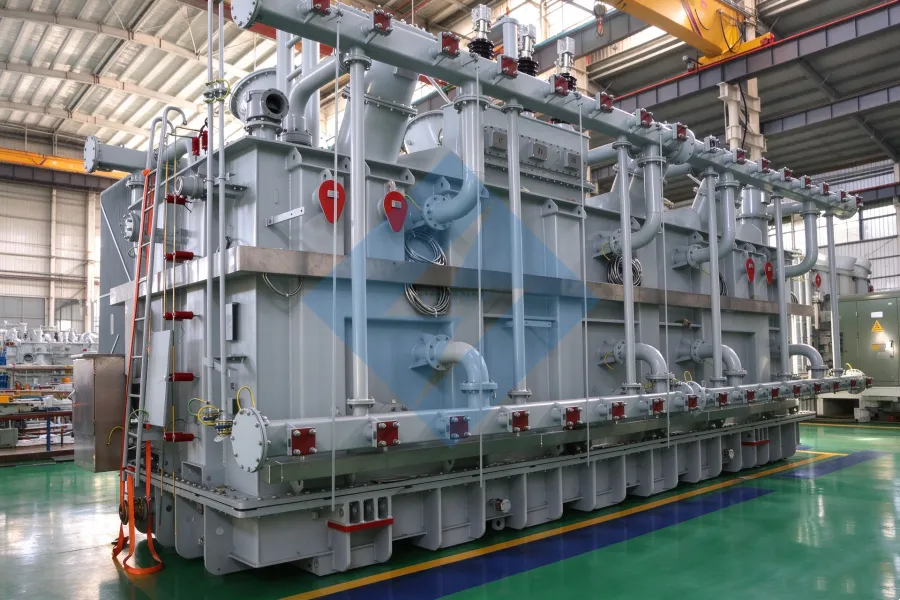
The global power industry is facing growing pressure to expand electricity infrastructure, modernize aging grids, and support the rapid development of renewable energy and data centers. As a result, demand for power transformers and distribution transformers remains an important concern for utilities, EPC contractors, industrial operators, and electrical equipment distributors.
At the same time, transformer procurement costs are influenced by several factors, including copper prices, grain-oriented electrical steel (GOES) costs, insulation materials, labor, manufacturing capacity, testing requirements, and international logistics. For projects involving large power transformers or customized designs, manufacturing schedules can also become a critical factor in overall project planning.
For international buyers, the challenge is no longer simply finding the lowest transformer price. It is finding a qualified manufacturer that can meet technical requirements, provide reliable quality documentation, deliver within an acceptable schedule, and offer a competitive total cost of ownership.
One strategy worth considering is sourcing from qualified Chinese transformer manufacturers.
In this guide, Evernew Transformer explains the main factors affecting transformer prices in 2026, how to optimize transformer specifications, what to check when evaluating a Chinese supplier, and how to make better procurement decisions for utility, industrial, commercial, and renewable energy projects.
1. What Is Driving Power Transformer Prices in 2026?
Transformer prices depend on the design, materials, manufacturing complexity, testing requirements, and delivery conditions of each project. Understanding these factors helps buyers evaluate quotations more effectively.
1.1 Copper and Electrical Steel Prices
Copper and grain-oriented electrical steel are two important materials used in transformer manufacturing.
Copper is widely used in transformer windings because of its electrical conductivity and mechanical properties. Aluminum may also be used in suitable transformer designs, depending on the technical requirements and the manufacturer’s engineering assessment.
Grain-oriented electrical steel is commonly used in transformer cores. Its magnetic properties affect core losses, noise, and overall transformer efficiency.
Changes in the prices of these materials can influence manufacturing costs, although the effect on a specific quotation depends on the transformer design, material purchasing arrangements, and supplier pricing policies.
Procurement tip: When comparing quotations, confirm the winding material, core material requirements, guaranteed losses, and quotation validity period. A lower price may reflect a different design or material specification rather than a more efficient manufacturing process.
1.2 Growing Demand from Power Infrastructure and Renewable Energy
Investment in electricity networks, renewable energy projects, industrial facilities, and data centers creates demand for different types of transformers.
These applications do not all require the same equipment. A distribution transformer serving a commercial building has different design and manufacturing requirements from a large grid-connected power transformer or a transformer used in a solar power plant.
Project demand can also compete for manufacturing capacity, particularly when specialized designs, high voltage classes, or extensive testing are required.
Buyers should therefore evaluate delivery schedules according to the specific transformer type, rated capacity, voltage class, and project requirements rather than relying on a single industry-wide lead-time estimate.
1.3 Manufacturing Capacity and Production Complexity
Transformer production involves several stages, including engineering design, core processing, winding, insulation assembly, drying, tank fabrication, oil filling where applicable, and electrical testing.
Customized transformers may require additional engineering reviews, special components, non-standard enclosures, or customer-specific inspection procedures.
For large power transformers, the manufacturing schedule may also depend on specialized production facilities and testing arrangements.
Procurement tip: Request a project-specific schedule that identifies drawing approval, material procurement, manufacturing, factory acceptance testing (FAT), and shipment. This makes it easier to assess whether the proposed delivery date is realistic.
1.4 Transportation, Packaging, and Import Costs
The quoted transformer price does not always represent the total cost of receiving the equipment at the project site.
Depending on the agreed Incoterms and delivery arrangements, buyers may also need to account for export packaging, inland transportation, ocean freight, insurance, customs clearance, import duties, taxes, unloading, and local transportation.
Large transformers may require special transport arrangements because of their dimensions and weight.
Before comparing offers, make sure that each supplier is quoting on the same commercial basis, such as EXW, FOB, CFR, or CIF, as applicable.
2. How to Choose the Right Transformer Without Overpaying
Reducing transformer procurement costs does not necessarily mean selecting a smaller unit or choosing the lowest-priced quotation. The objective is to obtain the correct equipment for the application without paying for unnecessary specifications.
2.1 Match Rated Capacity to Actual Load Requirements
Transformer capacity is typically expressed in kVA or MVA.
Selecting the appropriate rating requires an assessment of the expected load, load profile, starting currents where relevant, power factor, future expansion plans, and applicable design margins.
An undersized transformer may experience excessive loading or insufficient capacity during peak demand. An unnecessarily oversized transformer may increase the initial purchase cost and affect operating economics.
For industrial and commercial projects, buyers should consider both present demand and realistic future growth.
The final rating should be established through an appropriate electrical load assessment and confirmed against the applicable project requirements.
2.2 Evaluate Total Cost of Ownership, Not Just Purchase Price
Transformers can remain in service for decades. Their operating losses can therefore have a significant financial impact over the equipment’s service life.
A practical total cost of ownership (TCO) assessment considers:
Initial purchase price
Capitalized cost of no-load losses
Capitalized cost of load losses under the expected loading profile
Estimated maintenance and operating expenses
Transportation, installation, and other applicable project costs
No-load losses occur whenever the energized transformer is in service, while load losses vary with the current flowing through the windings and other load-dependent effects.
A transformer with a lower initial price may not be the most economical option if its losses are substantially higher.
When requesting quotations, ask suppliers to provide guaranteed no-load losses and load losses, together with the applicable reference temperature and test conditions.
For a meaningful comparison, evaluate all quotations using consistent electricity prices, expected operating hours, loading assumptions, and economic evaluation periods.
2.3 Specify the Correct Cooling Method and Installation Environment
The installation environment influences transformer selection, protection requirements, cooling arrangements, and maintenance planning.
Common options include:
Olie-nedsænkede transformatorer: Widely used in utility networks, outdoor distribution systems, substations, and many industrial applications.
Cast-resin dry-type transformers: Often selected for indoor installations where fire safety, building requirements, and environmental conditions influence equipment selection.
Pad-mounted transformers: Commonly used in North American-style underground distribution systems and commercial or industrial power networks.
Power transformers for renewable energy and substations: Designed around project-specific voltage levels, capacity, grid interface, and operating requirements.
Cooling design should also match the application. Examples include ONAN (Oil Natural Air Natural) and ONAF (Oil Natural Air Forced) for applicable oil-immersed transformers, and AN or AF arrangements for suitable dry-type designs.
Buyers should consider ambient temperature, altitude, ventilation, indoor or outdoor installation, enclosure protection, and applicable fire or environmental requirements.
Selecting a cooling arrangement or enclosure that is more complex than the application requires can increase cost without necessarily delivering a corresponding operational benefit.
2.4 Confirm Voltage, Vector Group, Impedance, and Tap-Changing Requirements
Electrical compatibility is essential.
Before ordering, confirm the following parameters:
Rated primary and secondary voltages
Rated frequency
Three-phase or single-phase configuration
Vektorgruppe
Percentage impedance
Insulation level and dielectric requirements
Tap range and tap-changing method
Viklingsmateriale
Cooling method and temperature-rise limits
Applicable technical standards
For example, an incorrect vector group or impedance value can create problems when integrating a transformer into an existing electrical system or operating transformers in parallel.
Tap-changing arrangements should be selected according to the project’s voltage regulation requirements. An off-circuit tap changer and an on-load tap changer serve different purposes and should not be treated as interchangeable options.
Confirming these parameters before manufacturing can reduce engineering changes, avoid delays, and prevent expensive modifications after delivery.
2.5 Avoid Unnecessary Special Requirements
Some projects require special testing, enhanced monitoring, particular accessories, or customized enclosures. These requirements may be justified by the operating environment, contractual obligations, or utility specifications.
However, unnecessary requirements can increase material costs, engineering work, and production time.
Review each requirement with the project engineer and transformer manufacturer. Where a specification allows alternatives, ask the manufacturer to explain the technical and commercial differences between them.
The goal is not to reduce essential safety or performance requirements. It is to ensure that every specification serves a clear operational or contractual purpose.
3. Why Consider Sourcing Power Transformers from China?
China has a substantial electrical equipment manufacturing industry, supported by domestic suppliers of electrical steel, copper products, insulation materials, transformer accessories, and other industrial components.
For international buyers, qualified Chinese manufacturers may offer competitive pricing, engineering flexibility, and access to a broad range of transformer designs.
However, supplier capabilities vary. Buyers should evaluate each manufacturer individually rather than assuming that all Chinese factories provide the same quality, certifications, or delivery performance.
3.1 Competitive Manufacturing Costs
Manufacturing costs are influenced by material sourcing, labor, production efficiency, factory utilization, engineering requirements, and supply-chain coordination.
Chinese manufacturers may be competitive in certain transformer categories because of established component supply networks and manufacturing scale.
The actual cost advantage depends on the transformer specification, quantity, material requirements, quality assurance procedures, and destination market.
For a fair comparison, request quotations based on the same electrical parameters, guaranteed losses, accessories, inspection requirements, packaging, and delivery terms.
3.2 Flexible Engineering and Customization
Many transformer projects require more than a standard catalog product.
Requirements may include non-standard voltage ratios, special vector groups, different winding materials, specific impedance values, customized enclosure protection, alternative cooling arrangements, or integration with existing switchgear and substations.
A capable manufacturer should review these requirements before quoting and clearly identify any deviations from the customer’s specification.
This is particularly important for EPC contractors, electrical distributors, industrial facilities, and renewable energy developers purchasing equipment for a defined project.
3.3 Integrated Supply Chains and Production Coordination
A well-established manufacturing supply chain can help coordinate material procurement, component availability, production scheduling, and quality control.
Nevertheless, supply-chain integration alone does not guarantee a shorter delivery time. Lead times depend on factory workload, material availability, design complexity, and required testing.
Buyers should request a realistic manufacturing schedule and ask how the supplier manages long-lead components and potential production delays.
3.4 International Standards and Quality Documentation
Qualified Chinese transformer manufacturers can design equipment to applicable international or national standards, depending on their technical capabilities and the requirements agreed for each project.
Commonly specified frameworks include IEC standards and applicable IEEE/ANSI standards. Other markets may impose additional national requirements or customer-specific specifications.
Before ordering, confirm the exact standards, required tests, documentation, and certification scope.
A manufacturer’s ability to design to a standard is not the same as holding a product certificate. Likewise, a certificate for one model or configuration should not automatically be assumed to cover every transformer produced by the company.
4. How to Evaluate a Chinese Transformer Manufacturer Before Ordering
Selecting the right supplier is one of the most important steps in transformer procurement. A structured evaluation can help reduce technical, commercial, and delivery risks.
4.1 Verify Manufacturing Capability
Review the manufacturer’s actual production facilities, relevant equipment, quality management processes, and experience with transformers similar to the one required.
For large or customized projects, consider a factory audit or a remote technical review.
Ask whether the supplier has experience with the required voltage class, rated capacity, cooling method, winding configuration, and destination market.
A manufacturer that regularly produces comparable equipment may be better positioned to understand the engineering and testing requirements of the project.
4.2 Review Testing and Quality-Control Procedures
Transformer testing helps verify whether the manufactured unit meets the agreed design and contractual requirements.
Depending on the transformer type and applicable standard, relevant documentation may include:
Routine test reports
Winding resistance measurements
Voltage ratio and phase displacement checks
Impedance and load-loss measurements
No-load loss and no-load current measurements
Dielectric tests
Insulation and other specified measurements
Type or special test reports, where required
Not every test is applicable to every transformer. The required test scope should be agreed in the technical specification and contract.
For projects requiring customer or third-party inspection, clarify the inspection stages, acceptance criteria, notification periods, and documentation requirements before production begins.
4.3 Check Product Certification Carefully
Certification requirements vary by destination market and product configuration.
If a project requires UL, CSA, CE-related conformity documentation, or another specific approval, verify the applicable requirements for the exact equipment being offered.
Ask the supplier to provide the relevant certificate or supporting documentation and confirm its scope, validity, and applicability to the proposed model.
Where a particular certification is mandatory, make it a documented condition of technical acceptance rather than relying on a general marketing statement.
4.4 Confirm Delivery Schedule and Contractual Responsibilities
The delivery date should be supported by a manufacturing plan, not just a verbal estimate.
A typical schedule may include:
Technical clarification and drawing submission
Customer drawing approval
Material procurement
Core and winding production
Assembly and drying
Testing and inspection
Packing and shipment
The actual sequence and duration depend on the transformer design and project requirements.
The contract should clearly establish the delivery basis, required documentation, payment milestones, warranty conditions, inspection responsibilities, and procedures for handling changes or delays.
4.5 Compare the Complete Commercial Offer
A lower equipment price does not necessarily mean a lower delivered cost.
When evaluating offers, check whether the quotation includes the required accessories, protection devices, monitoring equipment, special packaging, testing, documentation, and inspection.
Also confirm whether the price covers inland transport, export handling, ocean freight, insurance, import duties, and delivery to the final site.
Comparing quotations on an equivalent scope and Incoterms basis helps reveal the actual commercial differences between suppliers.
5. Evernew Transformer: Customized Transformer Solutions from China
Evernew Transformer, associated with Sichuan Yixin Electric Power Equipment Co., Ltd., supplies transformer solutions for international customers across utility, industrial, commercial, and renewable energy applications.
As a China-based transformer supplier, Evernew focuses on project-specific equipment selection, engineering coordination, manufacturing, testing, and export supply.
Our product range includes:
Oil-immersed distribution transformers
Oil-immersed power transformers
Cast-resin dry-type transformers
Pad-mounted transformers
Substation transformer solutions
Transformers for solar and wind power applications
Customized transformers for industrial and commercial power systems
5.1 Engineering Based on Project Requirements
Every project has different electrical and operating requirements.
Evernew works with customers to clarify rated capacity, primary and secondary voltages, frequency, vector group, impedance, tap range, cooling arrangement, insulation requirements, and enclosure protection.
The proposed design and scope are evaluated against the applicable project specification and agreed standards.
This approach helps buyers identify the equipment that fits their application rather than selecting a product based on price alone.
5.2 Quality Control and Factory Testing
Transformer quality depends on the design, materials, manufacturing processes, inspection procedures, and verification of the completed unit.
The testing scope for an Evernew transformer is established according to the applicable design, product type, technical specification, and contract.
Customers can clarify the required routine tests, guaranteed losses, inspection documentation, and any applicable type or special tests during the technical review stage.
For projects requiring customer witness testing or third-party inspection, the arrangements should be agreed before production and incorporated into the project schedule.
5.3 Solutions for Different International Markets
Transformer requirements differ across regions and applications.
North American projects may specify IEEE/ANSI requirements, particular voltage configurations, pad-mounted designs, and market-specific certification requirements. Other projects may be based on IEC standards or local grid specifications.
Evernew reviews the requested technical standards and documentation during quotation and engineering discussions. Certification availability and compliance must be confirmed for the specific product and configuration required.
This helps international buyers identify potential technical gaps before placing an order.
5.4 Factory-Direct Quotation and Project Coordination
Working directly with a manufacturer gives buyers an opportunity to discuss technical details, clarify scope, and coordinate the quotation with the production requirements.
For customized transformers, early technical communication is especially valuable because it can reduce misunderstandings about voltage ratios, vector groups, accessories, inspection requirements, and delivery expectations.
Evernew welcomes inquiries from EPC contractors, utilities, industrial customers, renewable energy developers, and transformer distributors seeking project-specific supply solutions.
6. How to Request an Accurate Transformer Quotation
To obtain a technically meaningful and commercially comparable quotation, buyers should provide as much of the following information as possible.
Basic electrical requirements
Rated capacity in kVA or MVA
Primary and secondary voltages
Rated frequency
Single-phase or three-phase configuration
Vektorgruppe
Impedance, if specified
Tap range and tap-changing requirements
Design and installation requirements
Oil-immersed or dry-type construction
Copper or aluminum windings, if specified
Afkølingsmetode
Indoor or outdoor installation
Ambient temperature and altitude
Enclosure protection requirements
Required accessories and monitoring equipment
Project and commercial requirements
Gældende standarder
Guaranteed loss requirements
Required inspection and testing
Destination country and delivery location
Required quantity
Target delivery date
Preferred Incoterms
Available technical specifications or single-line diagrams
If some parameters have not yet been determined, provide the information available. The manufacturer can then identify the missing details that need to be confirmed before finalizing the technical offer.
A complete technical specification or single-line diagram is particularly useful for customized transformers and substation projects.
7. Conclusion: Make Transformer Procurement Decisions Based on Value
Rising material costs, changing electricity demand, manufacturing constraints, and logistics expenses make transformer procurement increasingly complex.
The most effective way to control costs is to evaluate the complete project requirement, optimize transformer specifications, compare guaranteed losses, verify supplier capabilities, and assess the full delivered cost.
For international buyers, qualified Chinese manufacturers can be a competitive sourcing option, particularly when engineering flexibility, production coordination, and factory-direct communication are important.
The key is to select a supplier based on verifiable technical capability, appropriate quality documentation, realistic delivery commitments, and a commercial offer that matches the project scope.
Evernew Transformer supports international customers seeking oil-immersed, dry-type, pad-mounted, and customized transformer solutions for utility, industrial, commercial, and renewable energy applications.
Request a Transformer Quotation from Evernew
Planning a new power project or looking for a transformer manufacturing partner in China?
Send Evernew Transformer your technical specifications, single-line diagram, or basic project requirements. Our team can review the information, clarify outstanding technical details, and prepare a project-specific quotation.
E-mail: info@evernewtransformer.com
Hjemmeside: https://evernewtransformer.com/
To help us respond efficiently, please include your required transformer capacity, primary and secondary voltages, applicable standards, installation environment, quantity, and destination country.
Contact Evernew Transformer to discuss your project and explore a suitable transformer solution.
