


Como selecionar o modelo certo para segurança, estabilidade e confiabilidade a longo prazo
Em fábricas industriais, os problemas elétricos raramente aparecem como “falhas de energia”.”
Eles se manifestam como paradas inesperadas, erros de controle, danos ao equipamento ou riscos à segurança.
Por esse motivo, transformadores de isolamento são amplamente utilizados em fábricas, instalações de processamento e subestações industriais. Entretanto, muitas fábricas ainda selecionam os transformadores de isolamento com base no hábito ou no preço, e não nos requisitos elétricos reais.
Este artigo explica como as fábricas industriais devem escolher corretamente os transformadores de isolamento, a partir de uma perspectiva prática de engenharia e aquisição.
1. O que um transformador de isolamento realmente faz (perspectiva de fábrica)
Um transformador de isolamento não é simplesmente um “transformador especial”.”
Sua função principal é:
Para separar o sistema elétrico da fábrica do lado da alimentação, reduzindo a interferência elétrica e os riscos de segurança.
As principais funções incluem:
-
Isolamento elétrico entre a entrada e a saída
-
Redução de falhas de aterramento
-
Supressão de ruído elétrico e interferência
-
Proteção de equipamentos industriais sensíveis
Na maioria das fábricas, os transformadores de isolamento são Proporção de 1:1, ou seja, a tensão permanece inalterada enquanto o isolamento é obtido.
2. Por que os transformadores de isolamento são essenciais em fábricas industriais
As fábricas enfrentam desafios elétricos que os edifícios comerciais e os sistemas residenciais não enfrentam:
-
Altas correntes de partida dos motores
-
Mudanças frequentes de carga
-
Distorção harmônica de acionamentos e inversores
-
PLCs, sensores e sistemas de controle sensíveis
Os transformadores de isolamento ajudam a resolver esses problemas:
-
Prevenção da propagação de falhas
-
Estabilização do solo de referência
-
Melhoria da qualidade geral da energia
Isso os torna essenciais para continuidade e segurança da produção, e não apenas a conformidade.
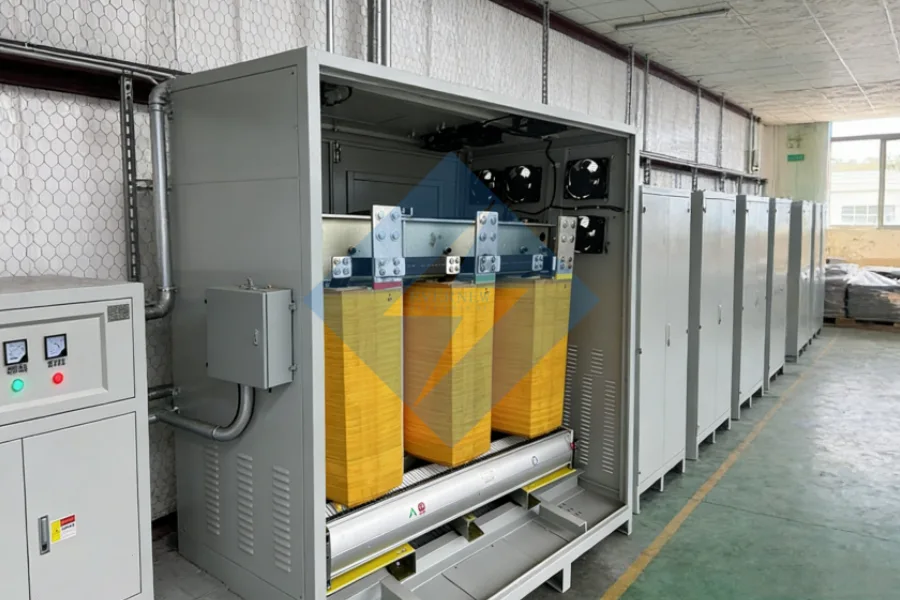
3. Aplicações industriais comuns de transformadores de isolamento
Os transformadores de isolamento são normalmente instalados em:
-
Centros de usinagem CNC
-
Linhas de produção automatizadas
-
PLC e painéis de controle
-
Sistemas de embalagem e montagem
-
Plantas químicas e farmacêuticas
-
Processos de fabricação sensíveis a dados
Nesses aplicativos, sinais de controle estáveis e potência sem ruído são mais importantes do que a capacidade de energia bruta.
4. Como escolher o transformador de isolamento correto para uma fábrica
É nesse ponto que muitos compradores cometem erros.
Abaixo estão os principais critérios de seleção que realmente importam em ambientes industriais.
4.1 Capacidade nominal: Evite o subdimensionamento e o superdimensionamento
Os compradores de fábrica geralmente selecionam a capacidade com base apenas na carga conectada. Isso é arriscado.
Melhores práticas:
-
Calcular a carga total
-
Adicionar margem de corrente inicial
-
Reservar a capacidade do 20-30% para expansão futura
Um transformador subdimensionado causa superaquecimento.
Um transformador superdimensionado desperdiça energia e espaço.
4.2 Configuração de tensão: Corresponder às condições reais de operação
As tensões industriais típicas incluem:
-
380V / 400V / 415V
-
480V
-
220V / 230V
Garantir:
-
A tensão de entrada corresponde à alimentação de fábrica
-
A tensão de saída atende aos requisitos do equipamento
-
A estratégia de aterramento neutro é claramente definida
O aterramento incorreto anula o objetivo do isolamento.
4.3 Classe de isolamento e aumento de temperatura
Os ambientes industriais são adversos:
-
Alta temperatura ambiente
-
Poeira
-
Operação contínua
Escolha transformadores com:
-
Isolamento Classe F ou Classe H
-
Projeto conservador de aumento de temperatura
Isso afeta diretamente a vida útil.
4.4 Blindagem e supressão de ruído
Para fábricas com:
-
VFDs
-
Inversores
-
Instrumentos de precisão
Recomenda-se enfaticamente a blindagem eletrostática entre os enrolamentos.
Isso reduz significativamente a transferência de ruído de alta frequência.
4.5 Método de resfriamento e espaço de instalação
Opções comuns:
-
Tipo seco resfriado a ar (a maioria das fábricas)
-
Ventilação forçada para áreas de alta carga
Considere:
-
Local de instalação
-
Condições de ventilação
-
Acesso para manutenção
Os transformadores de isolamento devem dissipar o calor de forma confiável.

5. Conformidade e padrões são mais importantes do que nomes de marcas
Para os compradores industriais, a certificação não é opcional.
Os padrões comuns incluem:
-
Normas IEC
-
Referências do IEEE
-
Códigos elétricos locais
Um fabricante qualificado deve fornecer:
-
Folhas de dados completas
-
Relatórios de testes de rotina
-
Desenhos claros
-
Suporte estável de longo prazo
6. Erros típicos que as fábricas cometem ao comprar transformadores de isolamento
Evite esses erros comuns:
-
Seleção somente por classificação de kVA
-
Ignorando o método de aterramento
-
Subestimar o conteúdo harmônico
-
Escolha de unidades de baixo custo com isolamento ruim
-
Nenhuma consideração para expansão futura
Esses erros levam a custos ocultos e tempo de inatividade.
7. Por que a capacidade do fabricante é importante
Os transformadores de isolamento podem parecer simples, mas as unidades de nível industrial não são.
Um fabricante competente deve ter:
-
Corte e enrolamento de núcleo interno
-
Processo de isolamento rigoroso
-
Impregnação a vácuo
-
Testes de rotina completos
As fábricas devem fazer parcerias com fabricantes, não com comerciantes.

8. Transformador Evernew: Apoiando a estabilidade da energia industrial
A Evernew Transformer é uma fabricante profissional de transformadores que atende a clientes industriais em todo o mundo.
Nossos transformadores de isolamento são projetados para:
-
Operação industrial contínua
-
Alta confiabilidade do isolamento
-
Baixo nível de ruído e desempenho estável
Apoiamos as fábricas com:
-
Seleção orientada por engenharia
-
Configurações de tensão personalizadas
-
Entrega confiável
-
Suporte técnico de longo prazo
9. Considerações finais: Os transformadores de isolamento são uma decisão estratégica
Em fábricas industriais, os transformadores de isolamento não são acessórios - eles são componentes de infraestrutura.
A seleção correta melhora:
-
Confiabilidade do equipamento
-
Continuidade da produção
-
Segurança elétrica
A seleção incorreta aumenta o risco operacional.
Procurando um transformador de isolamento industrial?
Se estiver selecionando transformadores de isolamento para fábricas, subestações industriais ou linhas de produção automatizadas, a Evernew Transformer pode dar suporte à sua avaliação técnica e aos requisitos do projeto.
📩 Entre em contato conosco para obter folhas de dados, consultoria técnica ou suporte para cotação.
