

1. Indledning
I moderne elnet og tunge industrielle netværk afhænger stabiliteten i strømoverførslen af en pålidelig spændingsomformning. Olie-nedsænkede strømtransformatorer er fortsat den ubestridte rygrad i høj- og mellemspændingsinfrastrukturer over hele verden. Uanset om det drejer sig om at øge produktionsspændingen på et anlæg til vedvarende energi eller at nedtransformere strømmen til et stort industrielt produktionsanlæg, tilbyder disse enheder en uovertruffen balance mellem effektivitet, varmestyring og langvarig holdbarhed.
For EPC-entreprenører, elektroingeniører og indkøbschefer hos forsyningsselskaber er det vigtigt at vælge den rigtige industriel transformator indebærer en afvejning af komplekse internationale tekniske standarder, miljømæssige begrænsninger og de langsigtede samlede ejeromkostninger (TCO). Denne omfattende vejledning giver et detaljeret overblik over alt, hvad du behøver at vide om oliefyldte transformere – lige fra de grundlæggende funktionsprincipper og konstruktionsformer til overholdelse af internationale standarder (IEC 60076 og IEEE/ANSI) og vigtige overvejelser i forbindelse med indkøb.
2. Hvad er en olie-dyppet transformer?
En olie-nedsænket transformer (også kendt som en oliefyldt transformer) er et statisk elektrisk apparat, hvor magnetkernen og de ledende viklinger er fuldstændigt nedsænket i en forseglet beholder fyldt med højkvalitets isolerende mineralolie eller syntetiske/naturlige estere.
I modsætning til tørtransformatorer, der er afhængige af luftcirkulationen i omgivelserne til isolering og afkøling, giver konstruktionen med flydende medium en arkitektur med to fordele:
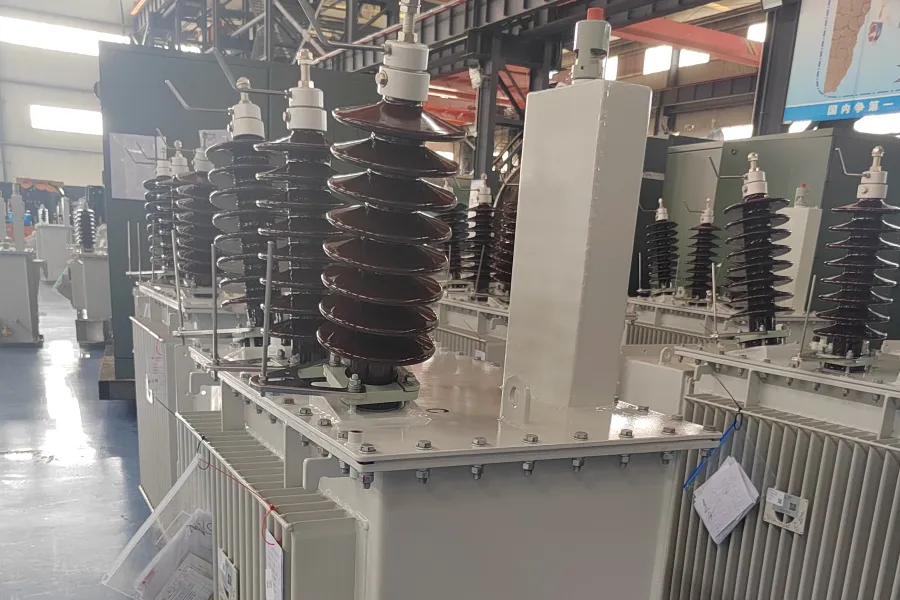
- Dielektrisk isolering: Transformatorolien har en betydeligt højere dielektrisk styrke end luft. Den mætter fuldstændigt det isolerende papir og de isolerende lag, der omslutter kobber- eller aluminiumspolingerne, og forhindrer dermed lysbue, koronaudladning og dielektrisk nedbrud under højspændingsbelastninger.
- Varmeafledning: Når transformeren er i drift, genererer de elektriske tab i viklingerne (kobbertab) og kernen (jernstab) betydelig varme. Den isolerende olie fungerer som et yderst effektivt varmeoverføringsmedium, der absorberer varmeenergi direkte fra de aktive komponenter og overfører den via konvektion til de udvendige radiatorvægge eller køleventilatorerne.
3. Funktionsprincip og indre komponenter
Den grundlæggende funktion af en oliefyldt enhed styres af Faradays lov om elektromagnetisk induktion. Når vekselstrøm (AC) løber gennem primærviklingen, genererer den en kontinuerligt varierende magnetisk flux i den laminerede siliciumstålkerne. Dette skiftende magnetfelt bevæger sig gennem kernens bane og inducerer en proportional elektromotorisk kraft (EMK) i sekundærviklingen, hvilket ændrer spændingsniveauet i overensstemmelse med viklingsforholdet:
V2
N2
Hvor V1 og V2 repræsenterer primær- og sekundærspændingerne, og N1 og N2 angiver antallet af viklinger i de respektive viklinger.
For at sikre, at denne proces kan opretholdes kontinuerligt under ekstreme netforhold, omfatter den interne struktur flere kritiske delsystemer:
- Den magnetiske kerne: Fremstillet af kornorienterede siliciumstålplader med høj permeabilitet for at minimere hysterese- og hvirvelstrøms tab.
- Viklinger/spoler: Kobber- eller aluminiumledere med høj ledningsevne, der er anbragt i koncentriske cylindriske mønstre, og som er optimeret til at modstå mekaniske kortslutningskræfter.
- Tap Changer: En elektromekanisk mekanisme, der bruges til at justere transformatorens omsætningsforhold for at udligne svingninger i forsyningsspændingen. Dette kan være en Off-Circuit Tap Changer (OCTC) der er i drift under strømafbrydelser, eller en On-Load Tap Changer (OLTC) til dynamisk netregulering i realtid.
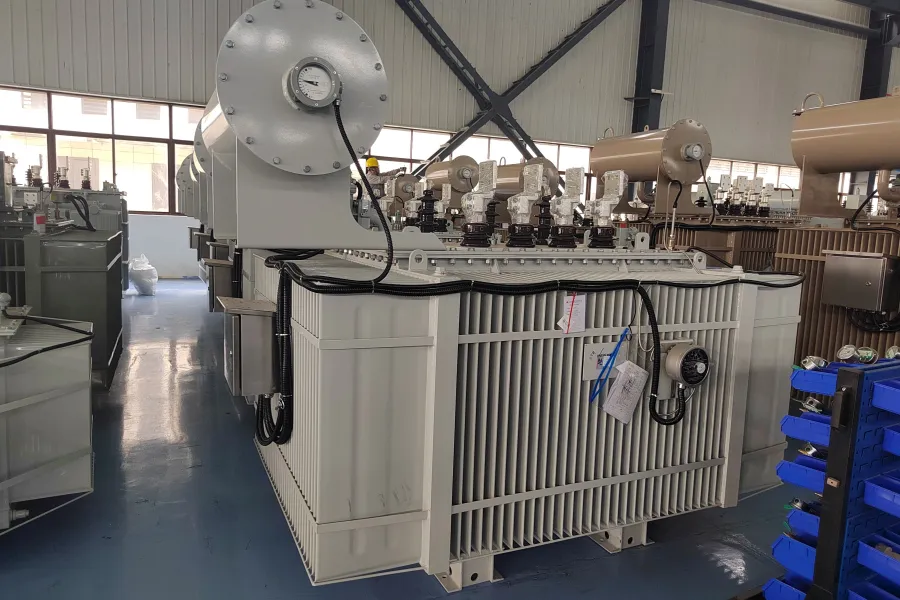
- Conservator Tank: En hjælpetank, der er monteret over hovedbeholderen, og som tager højde for oliens udvidelse og sammentrækning under temperaturudsving, hvorved det forhindres, at olien kommer i direkte kontakt med luftfugtighed og ilt.
4. De vigtigste fordele i forhold til tørtransformatorer
Når man vurderer kapitaludstyr til anvendelse i forsyningssektoren eller den tunge industri, er et af de mest fremtrædende spørgsmål i branchen sammenligningen mellem væskeisolerede og tørisolerede enheder. Til mellem- til højspændingsanvendelser byder olieisoleret udstyr på klare logistiske og driftsmæssige fordele:
| Funktion / Fordel | Oliedækkede effekttransformatorer | Tørtransformatorer (støbt harpiks) |
|---|---|---|
| Spændings- og kapacitetsgrænser | Stort set ubegrænset (op til 500 kV+ og hundredvis af MVA) | Er typisk begrænset til ≤ 35 kV og lavere MVA-værdier |
| Køleeffektivitet | Væskekonvektion sikrer en fremragende varmeoverførsel, hvilket gør den ideel til kontinuerlige høje belastninger | Anvendelse af naturlig eller mekanisk ventilation, hvilket begrænser effektiviteten af varmeafledningen |
| Overbelastningskapacitet | Den høje termiske inerti gør det muligt at håndtere midlertidige kraftige overbelastninger | Dårlig overbelastningstolerance; tilbøjelig til hurtig nedbrydning af isoleringen |
| Levetid | 25 til 30+ år med regelmæssig olieservice og -kontrol | Normalt 15 til 20 år; vanskeligt at reparere, hvis viklingerne går i stykker |
| Miljømæssig modstandsdygtighed | De lufttætte tanke gør dem ideelle til udendørs brug, områder med høj forurening og kystområder | Egnet til indendørs brug; følsom over for støv og fugt |
| Startkapitalomkostninger | Meget omkostningseffektiv i forhold til effektkapaciteten | Højere produktionsomkostninger ved samme KVA-effekt |
5. Klassificeringer og typer af oliefyldte transformere
5.1 Fordelingstransformatorer
Disse enheder, der typisk har en effekt på mellem 10 kVA og 2500 kVA, installeres i lokale distributionsnet for at nedtransformere mellemspændingsstrøm (f.eks. 11 kV, 22 kV, 33 kV) til lavspænding (f.eks. 400 V/230 V) til direkte brug i erhverv, boliger og let industri. De er konstrueret til høj effektivitet hele døgnet, da de kører kontinuerligt under varierende belastninger. Til netklynger med højt forbrug vælger ingeniører ofte optimerede konfigurationer såsom 2500 kVA trefaset oliefyldt fordelingstransformator for at sikre standardoverensstemmende effektivitet og ekstreme driftscyklusser.
5.2 Transformatorer til transformerstationer
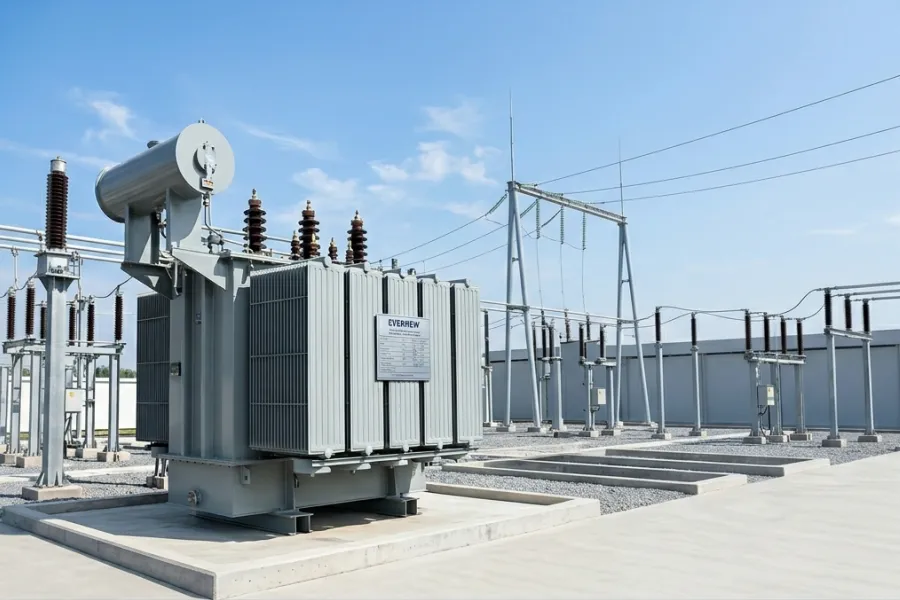
Disse systemer med høj kapacitet (fra flere MVA op til hundreder af MVA), der er placeret ved centrale knudepunkter i transmissionsnettene, øger produktionsspændingen til langdistancetransport eller sænker transmissionsspændingerne (f.eks. 110 kV, 115 kV, 230 kV, 500 kV) til distributionsniveauer. De er udstyret med omfattende overvågningssystemer, herunder gas-i-olie-analysatorer og avancerede kølekontrolsystemer. EPC-entreprenører kan udforske vores omfattende sortiment af strømtransformere til engroshandel så de passer til de forskellige budgetter for højspændingsstationprojekter.
5.3 Transformatorer monteret på sokkel
En standardkonfiguration til nordamerikanske underjordiske distributionssystemer, forsyningsnet og erhvervskomplekser. Der er tale om manipulationssikre, lavprofilerede kabinetter, der monteres i jorden. De er udstyret med integrerede kabelskab til højspænding og lavspænding med muligheder for dødfront eller konfigurationer med strømførende frontpaneler, hvilket sikrer maksimal sikkerhed i omgivelser med offentlig adgang.
5.4 Industrielle strømtransformere
Specielt udviklet til at modstå de krævende driftsforhold i tung industri, såsom kemiske anlæg, stålværker og minedrift. Denne kategori omfatter specialiserede ensrettertransformatorer til industriel automatisering eller elektrolyse, og ovnstransformatorer udviklet til at modstå ekstreme, gentagne kortslutningsstrømme og kraftige harmoniske forvrængninger.
6. Internationale tekniske standarder og overholdelse heraf
De globale elnet kræver, at internationale kvalitets- og sikkerhedsstandarder overholdes nøje. En førende leverandør af strømtransformere skal udvikle og fremstille udstyr, der nøje overholder de regionale netkrav.
- IEC 60076-serien: Den primære globale standard, der følges i hele Europa, Asien, Afrika og i internationale nøglefærdige projekter. Den fastlægger isoleringsniveauer, grænser for temperaturstigning, støjniveauer og kortslutningsmodstand for en fordelingstransformator IEC 60076 en enhed, der opfylder kravene.
- IEEE C57 / ANSI: Den endegyldige ramme for nordamerikanske forsyningsnet. Den fastlægger specifikke testtolerancer, sikkerhedsstandarder for kabinetter til udstyr monteret på fundamenter samt specifikke gennemføringsløsninger.
- ABNT NBR 5356 / NBR 5440: Vigtige standardiseringsveje for udbygningen af elnettet i Brasilien og på de sydamerikanske markeder.
- GOST-standarder: Obligatoriske certificeringer, der kræves i forbindelse med ingeniørprojekter i Rusland og i regionerne i Samfundet af Uafhængige Stater (SUS).
7. Globale anvendelser inden for ingeniørvirksomhed og forsyningssektoren
Den alsidige miljømæssige modstandsdygtighed hos oliefyldte systemer gør dem til det foretrukne valg inden for et bredt spektrum af krævende brancher:
- Elforsyning, transmission og distribution: Strømtransmission i stor skala via langdistance-transmissionsledninger og transformerstationer i byområder.
- Integration af vedvarende energi: Forhøjelse af lavspændingsudgangene fra solcelleomformermatricer og vindmøllernes naceller for at sikre en problemfri sammenkobling med elnettets højspænding.
- Olie, gas og petrokemikalier: Levering af robust, eksplosionssikret strømforsyning til fjerntliggende udvindingsplatforme og store raffinaderikomplekser, hvor kemiske dampe i omgivelserne kræver fuldstændig tætning af indkapslingen.
- Minedrift: Leverer kraftfuld strøm med høj kapacitet til åbne brud og underjordiske minedrift, der er udsat for ekstreme vibrationer, høj støvbelastning og barske omgivelsestemperaturer.
8. Vigtige udvælgelseskriterier ved indkøb
For at optimere nettets stabilitet og minimere driftsfejl skal indkøbsafdelinger og rådgivende ingeniører fastlægge præcise tekniske parametre, når de indkøber fra en producent af oliefyldte transformere:
- Nominel effekt (kVA / MVA): Den maksimale kontinuerlige belastning, som transformeren kan klare. Der bør altid tages højde for fremtidige udvidelsesmuligheder.
- Spændingsforhold og afgrænsningsområde: Nøjagtige nominelle primær- og sekundærspændinger med de krævede trin (f.eks. ± 2 × 2,5%).
- Betegnelser for kølemetoder:
- ONAN (Oil Natural Air Natural): Passiv køling via naturlig oliekonvektion og luftcirkulation.
- ONAF (Oil Natural Air Forced): Installation af elektriske ventilatorer for at øge kølekapaciteten i perioder med spidsbelastning.
- Konfiguration af vektorgruppe: Tilpasning af de interne faseforhold (f.eks., Dyn11 for standarddistributionsnet, der muliggør belastning af nullederen; YNd11 (til opstigningsanlæg på transmissionsniveau i transformerstationer).
- Grundlæggende isoleringsniveau (BIL): Modstandsdygtighed over for spidsimpulsspænding, der beskytter transformatorens viklinger mod lynnedslag og interne koblingsspændingsstød.
- Begrænsninger vedrørende installationsmiljøet: Angivelse af parametre for udendørs terræn, klassificeringer af kystkorrosion (malingsserier i marinekvalitet C4/C5), seismiske zoner og ekstreme omgivelsestemperaturer.
9. Hvorfor vælge EverNew Transformer som din tekniske samarbejdspartner?
Som førende Leverandør af strømtransformere i Kina og en vigtig aktør på det globale marked, EverNew Transformer leverer elektrisk udstyr i premium-kvalitet til forsyningsvirksomheder, der er udviklet til at yde sit bedste under verdens mest krævende netforhold. Med udgangspunkt i vores store, topmoderne produktionsanlæg kombinerer vi avanceret produktionsteknologi med strenge kvalitetskontrolsystemer.
- Omfattende produktsortiment: Har kapacitet til at udvikle og fremstille transformere med høj kapacitet op til 500 kV og distributionsløsninger, der er skræddersyet til enhver netkonfiguration.
- Omfattende projektportefølje: Dokumenteret erfaring med levering af robuste distributionsledninger i stor skala, transformerstationer til tung industri samt anlæg i henhold til nordamerikanske standarder med pad-monterede transformere.
- Arkitektur med fuld overholdelse: Fuldstændig teknisk overensstemmelse med IEC 60076, IEEE/ANSI C57, ABNT NBR, samt andre internationale reguleringsorganer på energisektoren.
- Global eksportaktivitet: Vi leverer hurtigt pålidelige anlæg til elinfrastrukturen til EPC-entreprenører, offentlige forsyningsselskaber og industrielle distributører i hele Europa, Nordamerika, Sydamerika, Afrika og Asien.
- Skræddersyede ingeniørydelser: Fra brugerdefinerede loop-feed-konfigurationer til en leverandør af transformere til montering på sokkel Fra netværk til yderst specifikke korrosionsbestandige belægninger til barske havmiljøer – vores interne ingeniørteam tilbyder fuldstændig OEM/ODM-udvikling af tekniske tegninger.
